What if the most sophisticated tool for recalibrating your nervous system isn't found in a pharmacy, but within your own ribcage? With over 51 million adults navigating chronic conditions, you're certainly not alone in feeling that physical distress is a permanent fixture; a relentless cycle of muscle tension and shallow gasps that many clinicians fail to fully acknowledge. It's exhausting to live in a state of constant bracing, whilst searching for effective breathing techniques for pain that actually deliver results. You've been looking for a way to bridge the gap between clinical theory and your lived reality.
By mastering these methods, you can move beyond superficial relaxation and begin to actively reconfigure your body's pain-processing threshold. This guide promises to show you how to harness your breath as a biological tool to reduce intensity and restore a sense of calm authority over your symptoms. We'll explore the science of the mind-body connection and provide a structured path to help you organise your physiological response, moving from a state of uncertainty to one of actionable insight.
Key Takeaways
- Interrupt the cycle where shallow thoracic breathing signals danger to the brain and reinforces physical distress.
- Leverage the vagus nerve as a biological information superhighway to inhibit pain through controlled exhalation.
- Evaluate specific breathing techniques for pain, including box breathing and the 4-7-8 method, to identify your personal baseline.
- Implement a structured five-step framework to organise a restorative practice and maintain a calm centre amongst the chaos of a flare.
- Connect individual breathwork to a comprehensive biopsychosocial strategy for long-term recovery and emotional regulation.
The Science of the Breath-Pain Loop: Why Breathing Matters
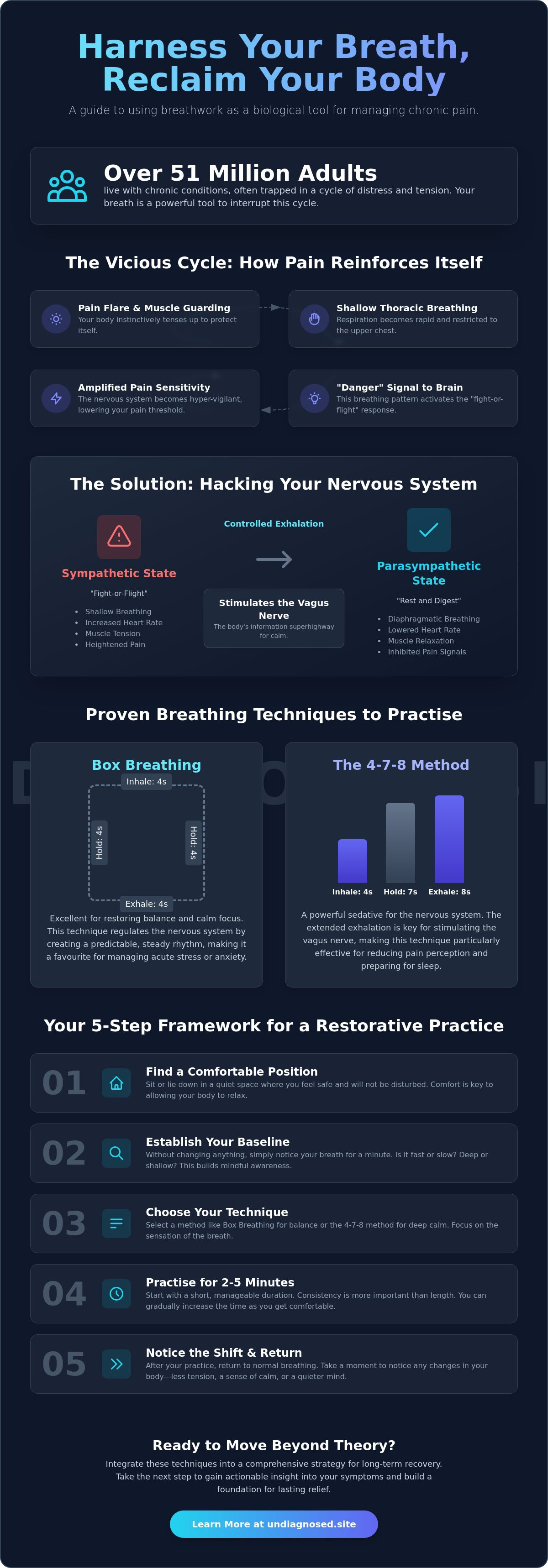
Pain isn't just a physical sensation; it's a physiological event that alters your entire system. When you experience a flare, your body naturally tenses. This muscle guarding often leads to a "Pain-Breath Cycle" where your respiration becomes rapid and restricted to the upper chest. This thoracic breathing is a survival mechanism. However, it inadvertently signals "danger" to the brain, maintaining a state of high alert that can actually lower your pain threshold. Understanding the science of breathing helps us see that this isn't a failure of will, but a predictable biological response that we can learn to influence.
By shifting how we inhale and exhale, we engage in biologic self-regulation. This isn't about "thinking positive" or ignoring the distress. It's about using a physical lever to change a physical state. When you employ specific breathing techniques for pain, you're sending a direct message to your brain that the immediate threat has passed. This reduces the need for the body to maintain its defensive bracing, which is often a primary source of secondary discomfort.
The Fight-or-Flight Response and Pain Amplification
Shallow breathing patterns activate the sympathetic nervous system, the "fight-or-flight" driver. This system heightens pain sensitivity by keeping the body in a state of hyper-vigilance. You might notice you're "over-breathing," which leads to a subtle CO2 imbalance in the blood. This chemical shift can cause tingling, dizziness, and increased physical discomfort, making the pain feel even more overwhelming. It's a terrifying sensation. Feeling "out of breath" whilst in pain creates a psychological feedback loop of anxiety, which further tightens the muscles. Interrupting this loop is the first step toward stability.
Shifting the Internal State: The Power of the Diaphragm
The diaphragm is more than just a muscle for air; it's a bridge to your autonomic nervous system. Unlike chest breathing, diaphragmatic breathing signals safety. As the diaphragm moves downward, it creates a gentle physical massage for your internal organs and stimulates the vagus nerve. This process helps reduce cortisol levels and switches the body into a restorative parasympathetic state. This shift is a core component of the biopsychosocial model, which recognises that physical recovery requires addressing biological, psychological, and social factors simultaneously. When you use breathing techniques for pain, you are actively participating in your own neurological recalibration, moving your body from a state of defence to a state of recovery.
Neuroscience and the Vagus Nerve: Rewiring the Pain Response
To understand how we can alter our physical experience, we must look at the vagus nerve. This nerve acts as a sophisticated information superhighway, connecting the brain to the heart, lungs, and digestive system. It's the primary component of the parasympathetic nervous system, responsible for the "rest and digest" state. Whilst many people view breathwork as a simple relaxation exercise, clinical research suggests that specific breathing techniques for pain can actually down-regulate a hypersensitive nervous system. By consciously slowing your exhalations, you stimulate the vagus nerve, which sends an inhibitory signal to the brain. This message tells the brain to dial down the intensity of pain signals, shifting the body from a state of defensive bracing to one of physiological safety.
This process is particularly vital when dealing with central sensitisation. This occurs when the central nervous system remains in a persistent state of high reactivity, amplifying physical sensations into distressing symptoms. In this state, the brain becomes over-protective, treating even minor stimuli as significant threats. Using breath as a biological lever allows you to communicate directly with these deeper brain structures, bypassing the "alarm" and establishing a new baseline of calm.
The Gate Control Theory of Pain
The "Gate Control Theory" suggests that the spinal cord contains a neurological "gate" that either blocks pain signals or allows them to continue to the brain. Your breath acts as a conscious gatekeeper. When you engage the prefrontal cortex through focused, rhythmic breathing, you're using the logical part of your brain to modulate the signals coming from the lower, more reactive centres. By focusing on diaphragmatic breathing techniques, you occupy the neural pathways that would otherwise be dedicated to processing pain, effectively closing the gate on distress. Central sensitisation is a state where the central nervous system stays in a persistent state of high reactivity, amplifying physical sensations into distressing symptoms.
Breaking the Neuroplastic Pain Pattern
Pain is often a learned behaviour of the brain, a phenomenon known as neuroplastic pain. When the brain repetitively experiences a "high alert" state, it creates efficient, well-worn neural pathways for that pain. Consistent breathing techniques for pain help to "rewire" these default responses. Every time you choose a slow, controlled breath over a shallow, panicked gasp, you're strengthening a pathway of safety. Over time, this repetitive practice helps the brain unlearn the pain response and return to a state of balance. You can find more about how the brain generates these persistent signals in our guide on the neuroscience of MUS. For those seeking a structured way to apply these concepts, the framework provided in Undiagnosed: The Mind and Body Connection offers a clear path toward reclaiming your physical well-being.
Comparing Effective Breathing Techniques for Chronic Pain Management
Every individual's nervous system has a unique signature. Because of this, no single method serves as a universal "best" practice; the effectiveness of breathing techniques for pain depends entirely on your current physiological state. Whilst some people find immediate relief in structured counts, others may require a more fluid approach to avoid feeling restricted. This VA guide to diaphragmatic breathing for pain highlights how choosing the right rhythm can assist in daily self-management and help you move from a state of bracing to one of regulation.
| Technique | Rhythm | Primary Benefit | When to Use |
|---|---|---|---|
| Box Breathing | 4-4-4-4 | Neurological Reset | During sudden pain flares |
| 4-7-8 Method | 4-7-8 | Deep Sedation | Insomnia or high anxiety |
| Pursed Lip | Inhale 2, Exhale 4 | Oxygen Control | During physical exertion |
Box Breathing for Immediate Stability
Box breathing provides a rhythmic anchor when you feel hijacked by a symptom flare. Used by elite performers to maintain composure under extreme pressure, the 4-4-4-4 cycle (inhale, hold, exhale, hold) creates a decisive reset for the nervous system. The "hold" phase is particularly crucial. It forces a deliberate pause in the frantic signalling of a pain event, allowing the brain to catch up with the body's need for safety. It's an active tool for reclaiming agency and finding a centre of control amongst the chaos of physical distress.
The 4-7-8 Technique for Deep Sedation
If box breathing is for stability, the 4-7-8 method is for sedation. By extending the exhale to nearly double the length of the inhale, you trigger a powerful parasympathetic response. To practise this, place your tongue against the ridge of tissue behind your upper front teeth and exhale through your mouth with a distinct "whoosh" sound. This acts as a natural tranquilliser for the nervous system, making it one of the most effective breathing techniques for pain when you're struggling to settle at night. For those navigating the intersection of physical discomfort and sleeplessness, this method is a vital component of successful sleep strategies for chronic pain.
The goal is to develop a toolkit that feels intuitive rather than burdensome. By testing these methods during lower-pain periods, you can identify your favourite approach, specifically the one that feels most like a safe harbour when the intensity begins to rise. Consistent practice turns these techniques from a conscious effort into a default biological response.
Implementation Guide: How to Organise Your Daily Practice
Establishing a routine requires a blend of clinical discipline and personal compassion. To begin using breathing techniques for pain effectively, you must first organise your environment. It's nearly impossible to recalibrate your nervous system whilst surrounded by distraction. Find a physical centre of calm where you can lower your guard. This isn't a retreat from reality, but a strategic pause to gather biological resources. Follow this five-step framework to build a sustainable practice:
- Establish a Sanctuary: Find a space where you won't be interrupted.
- Choose Accessibility: Ensure your posture supports your body without adding strain.
- Audit the Body: Scan for areas of bracing or muscle guarding.
- Micro-Dose the Practice: Start with short, frequent intervals rather than long sessions.
- Refract the Focus: Monitor the texture of the breath, not the volume of the pain.
Pacing is your most valuable ally. If you've spent years in a state of high-impact pain, your nervous system is primed for threat. Forcing a long practice can feel like an intrusion. Start small. Three minutes of focused breathing is more effective than twenty minutes of frustrated effort. When monitoring your progress, look for qualitative shifts: a softening of the jaw, a lower heart rate, or a moment of emotional clarity. These are the true markers of success.
Step-by-Step: Your First Five Minutes
Your first five minutes should be about ease, not effort. Posture is a personal choice; whether you are lying on a firm surface, sitting in a supportive chair, or even standing, the goal is to minimise muscle resistance. Once settled, perform a body scan. Notice where you are bracing against the pain. Don't try to "fix" it yet. Simply acknowledge it. Then, commence your chosen rhythm, focusing entirely on the physical sensation of air moving through your body. By attending to the breath, you provide the brain with a neutral stimulus to process, which can help dilute the intensity of the pain signals.
Overcoming Common Barriers
Barriers are a natural part of the process. If focusing on your breath makes you feel anxious, you are experiencing heightened interoceptive awareness. This is common when the body has been in a state of alarm for a long time. In these moments, it's useful to integrate other relaxation techniques for physical health, such as progressive muscle relaxation or grounding exercises. Persistence is vital. The neurological shifts you're seeking are cumulative. You aren't just breathing for today; you're training your brain for the future. For a comprehensive guide on how to navigate these challenges, consider the insights within Undiagnosed: The Mind and Body Connection.
Beyond the Breath: Integrating Techniques into a Biopsychosocial Recovery Plan
Breathing is a foundational gateway, but it is rarely the final destination. Whilst breathing techniques for pain provide a vital biological lever to lower immediate distress, they achieve their full potential only when integrated into a broader biopsychosocial framework. This approach rejects the idea that physical symptoms exist in a vacuum. Instead, it acknowledges that your recovery depends on addressing the complex interplay between your biology, your psychological state, and your social environment. By viewing breathwork as one of many functional neurological disorder tools, you shift from simply managing a crisis to actively rebuilding your health.
Long-term success relies on your ability to identify the stressors and emotional patterns that keep your nervous system in a state of high reactivity. If your brain perceives a constant threat, even the most disciplined breathing practice will struggle to maintain calm. The goal is to move from a mindset of survival to one of restoration. This shift requires a commitment to understanding the root causes of your symptoms rather than just suppressing the sensations. You aren't just looking for a temporary fix; you're seeking a permanent recalibration of your internal state.
The Role of Education in Recovery
Recovery is an intellectual journey as much as a physical one. Understanding the "why" behind your pain makes the "how" of your breathing practice significantly more effective. When you grasp the science of neural pathways, you no longer feel like a victim of random symptoms. The book Undiagnosed: The Mind and Body Connection provides this essential clinical context, offering a roadmap for those who feel overlooked by traditional medicine. For those seeking a structured, step-by-step methodology, The Mind and Body Connection Online Course translates these theories into practical, daily actions, helping you organise your path toward wellness.
Next Steps on Your Journey
As you move forward, consider maintaining a symptom and breath diary to track how different breathing techniques for pain influence your baseline. This data creates a tangible record of progress, helping you identify patterns and successes that might otherwise go unnoticed amongst the daily challenges. Whilst self-regulation is a powerful tool, complex functional symptoms often benefit from professional guidance to navigate the nuances of the recovery process. Your body possesses an inherent, remarkable capacity to heal. By providing the right signals of safety through breath, education, and emotional awareness, you can reclaim the dignity of a life no longer defined by physical distress.
Reclaiming Authority Over Your Nervous System
Restoring your health requires more than just masking sensations; it demands a fundamental shift in how your brain interprets physical signals. You've discovered that the breath isn't merely a relaxation tool but a biological lever for recalibrating a hypersensitive nervous system. By mastering specific breathing techniques for pain, you move from a state of reactive distress to one of proactive regulation, signalling safety to the brain and inhibiting the cycle of central sensitisation.
This journey doesn't end with a single breath. True recovery involves a structured, evidence-based approach that addresses the complex mind-body connection. Trusted by patients navigating medically unexplained symptoms, our curriculum focuses on long-term resolution rather than superficial fixes. Begin your journey to recovery with the Mind and Body Connection Online Course, featuring an evidence-based curriculum developed by Dr. Csaba Dioszeghy. You possess the capacity to influence your internal state and reclaim the dignity of a life focused on wellness. Your body is ready to listen; it's time to provide the right signals.
Frequently Asked Questions
Can breathing techniques really stop severe physical pain?
Breathing techniques for pain don't act as a pharmaceutical anaesthetic; instead, they function as a biological regulator. Whilst they may not "stop" severe pain instantly, they reduce the brain's perceived threat level. This shift can lower the intensity of the sensation and prevent the secondary muscle guarding that often amplifies physical distress.
How long does it take for breathing exercises to start working?
You can feel a shift in your heart rate and muscle tension within three to five minutes of focused practice. However, the cumulative benefits for chronic pain management, such as a lowered baseline of sensitivity, typically require consistent daily practice for several weeks. This timeline allows for the neurological rewiring necessary to change your default response to physical signals.
What is the best breathing technique for a sudden pain flare-up?
Box breathing is highly effective during a sudden flare because its structured 4-4-4-4 rhythm provides a decisive anchor for a hijacked nervous system. The equal lengths of inhale, hold, and exhale help to stabilise your physiology. This method is particularly useful when you feel overwhelmed, as it gives the prefrontal cortex a simple task to focus on whilst the body is in crisis.
Is it normal to feel dizzy when I start deep breathing?
Dizziness is a common experience for beginners and usually results from "over-breathing," which creates a temporary imbalance in carbon dioxide levels. If you feel light-headed, it's a signal to reduce the effort. Focus on a more natural, gentle pace rather than forcing large volumes of air, and ensure your exhalations are slow and relaxed.
Can I use these techniques if I have a respiratory condition?
Most people can safely use these methods, but those with respiratory conditions should proceed with caution and consult their clinician first. Whilst diaphragmatic breathing is often beneficial for lung function, certain rhythms like breath-holding may not be suitable for everyone. It's vital to adapt the practice to your physical capacity rather than following a rigid template.
How often should I practice breathing for chronic pain management?
Frequency is far more important than the length of each individual session. Practising breathing techniques for pain for three to five minutes, three or four times throughout the day, is more effective than a single long session once a week. This "micro-dosing" approach keeps your nervous system in a more regulated state and makes the techniques easier to access during a flare.
Why does my pain feel worse when I try to relax and breathe?
This phenomenon is often due to heightened interoceptive awareness. When you remove external distractions to breathe, your brain's "volume" on internal signals can feel louder. It's a sign that your nervous system is hyper-vigilant. If this happens, try focusing on an external sound or a physical sensation in a non-painful part of your body whilst you breathe.
Do I need a quiet room to perform these breathing techniques?
Whilst a quiet room is an excellent place to find your initial centre, you don't need a sanctuary to be successful. The ultimate goal is to use these tools amongst the chaos of daily life. Once you've organised your practice in a calm environment, you'll be better equipped to deploy these techniques in a busy office, on public transport, or during a stressful event.