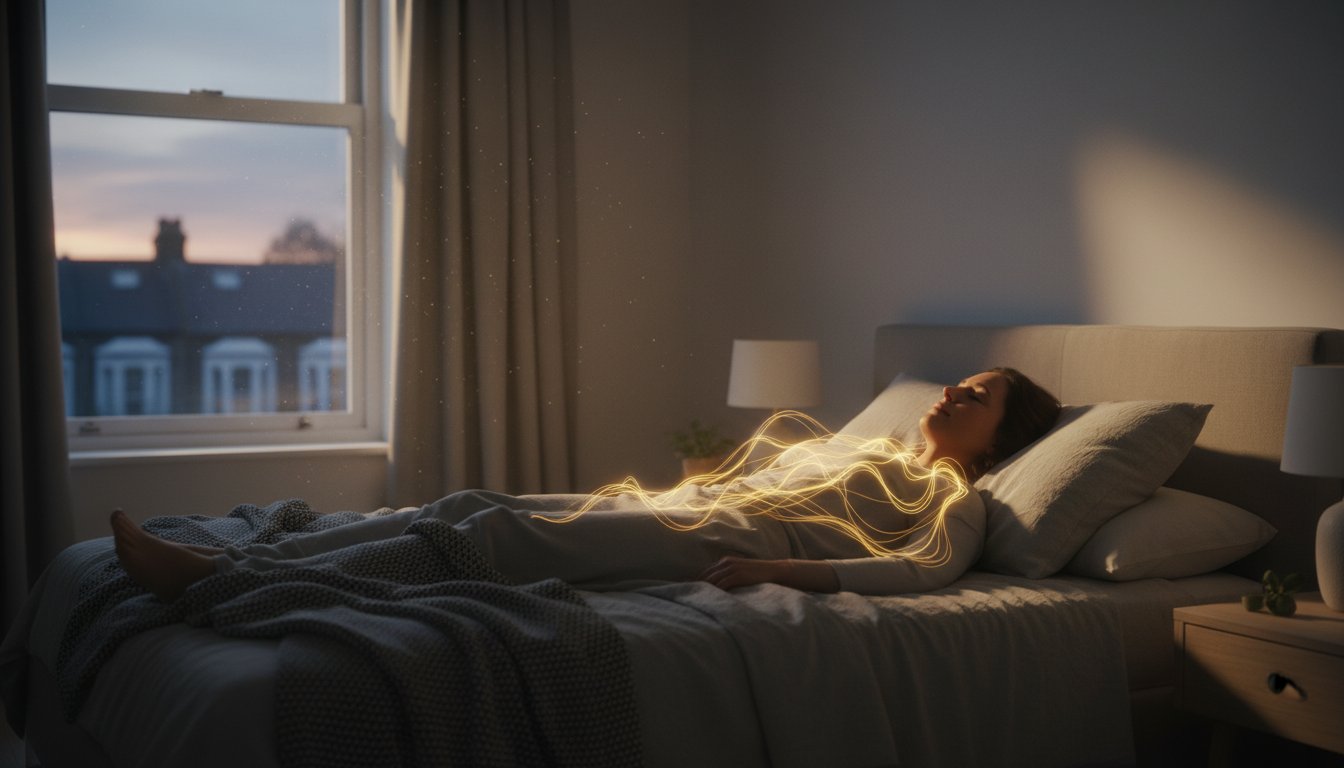
What if the reason your meticulous sleep hygiene routine is failing isn't a lack of discipline, but a nervous system that simply doesn't feel safe? If you are amongst the 50 to 88 per cent of people living with chronic pain who also battle insomnia, you know the exhausting reality of being "wired but tired." You have likely tried every darkened room and cooling pillow available, yet you still wake up in the middle of the night feeling dismissed by a medical system that often fails to see the person behind the pathology.
We understand that your pain is real and that traditional advice often feels like hype rather than hope. In this guide, we explore evidence-based sleep strategies for chronic pain that go beyond basic hygiene to address the fundamental mind and body connection. You will discover a structured biopsychosocial checklist designed to calm your nervous system and break the cycle of nocturnal distress. We will move from understanding the neuroscience of central sensitisation to implementing practical tools that prioritise your recovery and long-term well-being.
Key Takeaways
- Understand why standard sleep hygiene is often insufficient for breaking the bidirectional cycle of physical distress and insomnia.
- Explore evidence-based sleep strategies for chronic pain that address central sensitisation, the biological "volume knob" that amplifies pain signals at night.
- Utilise a biopsychosocial checklist to transform your bedroom into a sanctuary, prioritising psychological safety rather than just physical comfort.
- Learn practical techniques like somatic tracking to observe sensations without fear, effectively lowering the brain's overall threat response.
The Chronic Pain and Sleep Cycle: Why Traditional Advice Often Fails
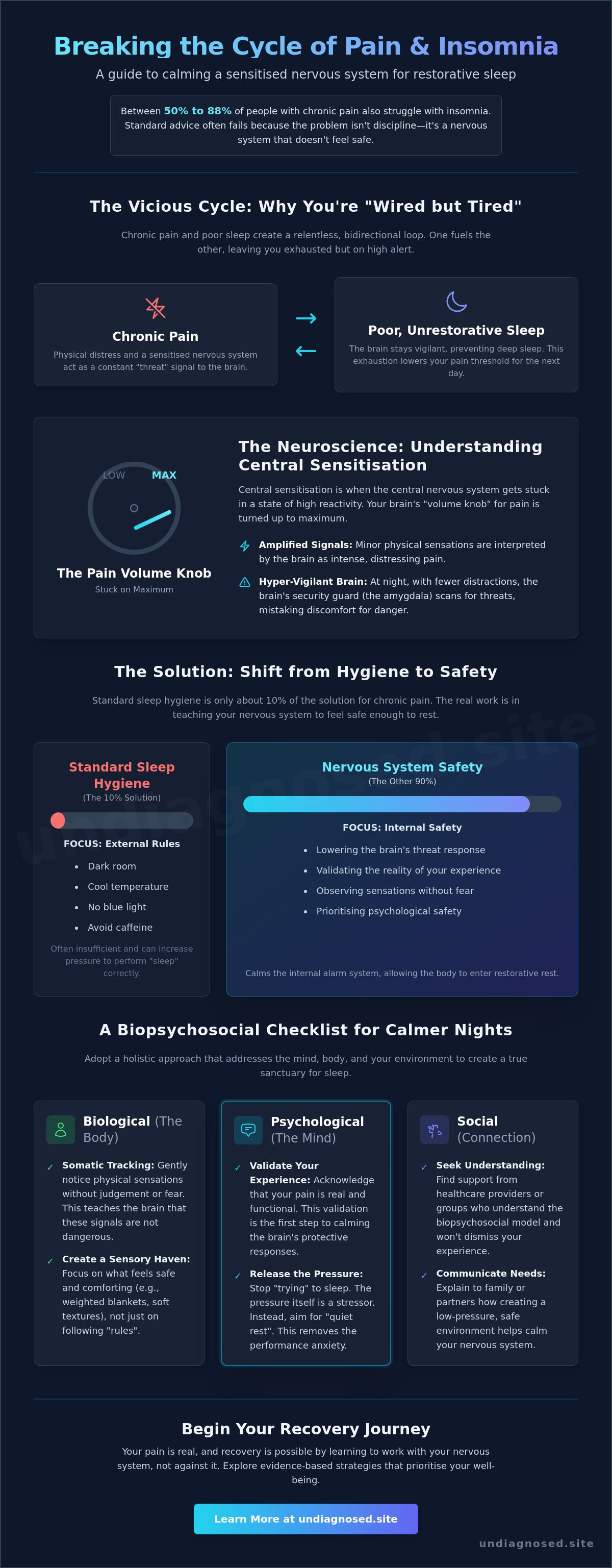
The chronic pain and sleep cycle is a relentless, bidirectional loop where physical suffering prevents rest, and the resulting exhaustion lowers your threshold for pain the following day. It's a physiological trap. When you're trapped in this cycle, the standard advice to "just relax" feels like a hollow platitude. Most clinical guidance focuses on external factors, yet for those living with persistent symptoms, the struggle isn't just about the environment; it's about a nervous system that has lost the ability to feel secure. Effective sleep strategies for chronic pain must address this internal alarm system rather than just the bedroom lighting.
Traditional sleep hygiene is often insufficient because it treats the symptom rather than the source. If your brain perceives pain as an active threat to your survival, it won't allow you to enter deep, restorative sleep stages, regardless of how many blue-light filters you use. We must shift the focus from hygiene to safety. Recovery begins when we convince the brain that the body is safe enough to let down its guard. The "wired but tired" state is a physiological manifestation of a sensitised nervous system that remains on high alert even when the body is physically depleted.
The Problem with "Standard" Sleep Hygiene
For most people, avoiding caffeine after midday or keeping the room cool is helpful. For a person in pain, these steps represent perhaps 10 per cent of the solution. It's incredibly frustrating to follow every rule in the book only to find your pain levels remain unchanged. This creates a secondary layer of nocturnal anxiety. When you try too hard to sleep, you inadvertently signal to your brain that sleep is a high-stakes task. This pressure increases cortisol levels, making the very rest you crave even more elusive. We need sleep strategies for chronic pain that de-escalate this biological tension rather than adding more rigid rules to your to-do list.
Validation, Not Dismissal: Your Pain is Real
If you've been told your symptoms are "all in your head," you've experienced the damage of medical dismissal. At Undiagnosed, we prioritise validation because acknowledging the reality of your experience is the first step toward calming the brain. Your symptoms are functional, meaning they're a product of how your nervous system is processing information. The biopsychosocial model, recently highlighted in the 2026 ACPA and Stanford Resource Guide to Chronic Pain Management, confirms that biological, psychological, and social factors all influence your pain experience. By understanding that your brain is trying to protect you through a sensitised response, you can begin to move from a state of constant defence to one of gradual recovery.
The Neuroscience of Nocturnal Pain: Understanding Central Sensitisation
Central sensitisation represents a fundamental shift in how your nervous system functions. Imagine your brain possesses a volume knob for pain. In a healthy state, this knob is set to a low, manageable level. However, for those living with chronic conditions, the knob becomes stuck at maximum. This means that even minor signals from the body are amplified into intense distress. Understanding this mechanism is vital when developing sleep strategies for chronic pain, as it explains why your body feels under siege even when you are physically safe in bed.
At night, the lack of external distractions creates a sensory vacuum. During the day, movement, conversation, and visual stimuli provide competing data for the brain to process. When these distractions vanish at 11 PM, the brain’s danger-sensing neurons become the primary focus. According to Stanford Medicine's guide to sleep and pain, this bidirectionality means the brain actually becomes more vigilant as the house grows quiet. Your amygdala, the brain's emotional security guard, begins scanning for threats, often mistaking physical discomfort for an active danger that requires you to stay awake.
The Brain’s Alarm System at Night
When the amygdala is hyper-vigilant, your threshold for waking up is significantly lowered. Emotional stress from the day acts as fuel for this fire, physically amplifying pain signals through the mind and body connection. It's a biological reality that a "normal" MRI or blood test cannot capture. Your pain is not a fabrication; it's a real, physiological event generated by a sensitised nervous system. Learning to lower this alarm response is a core component of effective sleep strategies for chronic pain, a concept explored deeply in The Mind and Body Connection Online Course.
Rewiring the Response to Pain
The good news is that the brain is plastic. This concept, known as neuroplasticity, suggests that just as the brain learned to be hyper-sensitive, it can learn to feel safe again. By changing your relationship with the sensations you feel whilst trying to rest, you can begin to turn that volume knob back down. You can explore the mechanics of this process in our article on The Neuroscience of MUS: Why Your Brain Creates Real Symptoms. Recovery isn't about ignoring the pain, but about teaching the brain that the pain is not a reason for an emergency response. This shift is the foundation of long-term relief amongst those who have felt overlooked by traditional medicine.
Your Sleep Environment and Routine: A Biopsychosocial Checklist
True recovery isn't found in a single product or a rigid rulebook; it's found in the alignment of your biological, psychological, and social environments. To move beyond the exhaustion of chronic symptoms, we must build a structure that signals safety to the brain at every level. This biopsychosocial checklist provides a framework for implementing effective sleep strategies for chronic pain that respect the complexity of your experience. Consistency amongst these three pillars is what transforms a bedroom from a place of frustration into a space for healing.
Biological Optimisation for Pain
The physical environment remains the foundation of your nocturnal experience. Temperature regulation is a critical factor, as keeping the body's centre cool is a primary biological signal for the onset of sleep. If your core temperature remains too high, your nervous system stays in a state of metabolic alertness. Choosing the right support is equally vital. Your mattress and pillow configuration should be adjusted to support functional symptoms, ensuring that pressure points don't trigger an alarm response from your sensitised nerves. Total darkness is also non-negotiable; it triggers the natural release of melatonin whilst reducing the visual "noise" that can keep a hyper-vigilant brain scanning for threats.
Psychological and Social Boundaries
The psychological atmosphere of your room dictates whether your brain perceives the bed as a sanctuary or a site of struggle. One of the most impactful sleep strategies for chronic pain is the removal of "clock-watching" behaviours. When you monitor the time, you inadvertently increase performance anxiety, which spikes cortisol and reinforces the brain's threat perception. Instead, focus on creating a pre-sleep "buffer zone"—a dedicated hour of activities that feel emotionally safe and physically soothing.
Social factors are often overlooked but are just as significant. Managing expectations with those you live with is an act of self-advocacy, not a lack of consideration. You might need to:
- Communicate your specific needs regarding light, sound, or movement to partners or family members.
- Establish boundaries around evening conversations to ensure the "buffer zone" remains undisturbed.
- Discuss temporary separate sleeping arrangements if a partner's behaviour inadvertently disrupts your recovery process.
By addressing these social stressors, you reduce the overall burden on your nervous system, making it easier for the mind and body connection to shift into a state of rest. This is about recovery, not rejection; it's about prioritising your long-term well-being through clear and compassionate communication.
Cognitive and Emotional Strategies: Calming the Nervous System
Once your environment is optimised, the focus must shift to the internal landscape. Cognitive and emotional sleep strategies for chronic pain are not about "thinking away" the discomfort. They are about retraining the brain to interpret physical signals without an immediate fear response. When you are lying in the dark, every sensation can feel like a crisis. By employing specific cognitive tools, you can lower your heart rate and signal to your nervous system that the current state of the body is safe. This internal shift is the bridge between lying in bed and actually resting.
Somatic Tracking and Pain Reprocessing
Somatic tracking is a powerful technique for de-escalating nocturnal distress. It involves checking in with your body from a place of curiosity rather than alarm. Most of us instinctively try to ignore pain or fight against it; however, this resistance only heightens the brain's threat perception. Instead, try observing the sensation as if you were a neutral researcher. Use objective language to describe what you feel. For example, replace emotionally charged words like "burning" or "stabbing" with neutral terms like "warmth," "pulsing," or "tingling." This subtle shift in vocabulary helps the brain categorise the sensation as a data point rather than a danger, facilitating a smoother transition into sleep.
The Vagus Nerve and Deep Relaxation
Your vagus nerve acts as the primary brake for your nervous system. You can manually stimulate this nerve through specific breathing patterns to switch your body from a sympathetic state to a parasympathetic state. The 4-7-8 technique is particularly effective. Inhale through your nose for four seconds, hold for seven, and exhale slowly through your mouth for eight. This prolonged exhalation is a direct biological signal to the heart to slow down. It's a physical override for a brain that's stuck on high alert.
Combine this with progressive muscle relaxation to release stored physical tension. By systematically tensing and then releasing different muscle groups, you provide the brain with tangible evidence that the body is capable of letting go. For a deeper dive into these methods, explore our Relaxation Techniques for Physical Health: A Biopsychosocial Guide. Effective recovery also depends on how you manage your energy during the day. Pacing ensures you don't reach bedtime in a state of total exhaustion, which often leads to the "wired but tired" phenomenon. If you are looking for more structured support, you can find Evidence-Based Functional Neurological Disorder Tools on our blog. To fully integrate these practices into your life, consider exploring The Mind and Body Connection Online Course to build a sustainable path toward restorative sleep.
Beyond Sleep Hygiene: The Mind and Body Connection for Long-Term Recovery
Recovery is more than a checklist of habits; it's a fundamental shift in how your brain communicates with your body. Whilst management focuses on dampening symptoms, recovery focuses on rebuilding the Mind and Body Connection. By implementing sleep strategies for chronic pain that address the root cause of your nervous system's alarm, you move away from temporary relief towards sustainable health. This transition requires you to stop viewing sleep as a battle to be won and start seeing it as a natural state that your body can rediscover once it feels secure.
The "Undiagnosed" framework is built on the principle of providing hope, not hype. We reject the "quick-fix" industry in favour of realistic, evidence-based optimism. This means acknowledging that whilst the journey takes time, the brain's ability to rewire itself is a scientific fact. When you align your daily behaviours with clinical insight, you provide your nervous system with a stabilizing influence. This methodical approach is what allows patients who have felt overlooked to finally find a sense of being heard and understood.
Education as Medicine
Understanding the "why" behind your physical symptoms is a biological intervention in itself. When you understand that your pain is a protective response rather than a sign of structural damage, your brain's overall threat level begins to drop. Dr. Csaba Dioszeghy’s work focuses on this exact bridge, translating complex neuroscience into practical, daily tools that lower the body's stress levels. Moving away from the "undiagnosed" state of fear allows you to replace anxiety with clarity. Knowledge acts as a translator between the complexities of the mind and the realities of the body, making it an essential component of any recovery programme.
Next Steps for Your Recovery Journey
Standard GP visits often lack the time or resources to address the intricate link between sleep and persistent pain. To bridge this gap, structured resources provide the depth required for true progress. The book, Undiagnosed: The Mind and Body Connection, offers a comprehensive roadmap for those who have felt dismissed by traditional pathways. Additionally, our online course provides a guided experience to help you implement these tools in a logical, organized way. To begin integrating these concepts into your daily routine, explore our Mind-Body Balance Tools to start your journey today.
True recovery from nocturnal distress requires a commitment to three final principles:
- Consistency: Applying sleep strategies for chronic pain daily to rewire the nervous system's response.
- Compassion: Validating that your pain is real and your body is attempting to protect you.
- Clinical Insight: Using evidence-based guidance to replace the fear of the unknown with the power of understanding.
By prioritising these pillars, you can break the cycle of nocturnal distress and rediscover the restorative power of sleep. You aren't just managing a condition; you're recovering your life.
Reclaiming Rest Through the Mind and Body Connection
Breaking the cycle of nocturnal distress requires a shift from managing symptoms to regulating your nervous system. By prioritising psychological safety and utilising somatic tracking, you can teach your brain that physical sensations are data points rather than dangers. These evidence-based sleep strategies for chronic pain move beyond the limitations of standard hygiene to address the root of central sensitisation. You aren't just trying to sleep; you're retraining your mind and body to coexist without fear.
This journey is supported by the clinical authority of Dr. Csaba Dioszeghy, whose work provides a rigorous biopsychosocial approach to medically unexplained symptoms (MUS). Whether you are seeking practical tools for functional neurological disorders (FND) or simply a way to lower your internal alarm, the path to relief is grounded in science. We offer hope, not hype, through structured guidance that validates your experience whilst providing a clear methodology for recovery. Discover the science of recovery in Undiagnosed: The Mind and Body Connection. Your body has the capacity to heal; you simply need the right resources to guide the way.
Frequently Asked Questions
Can chronic pain actually be cured by improving sleep?
Improving sleep is a foundational pillar of recovery rather than a "quick-fix" cure. Restorative rest lowers the brain’s threat perception and turns down the biological volume on central sensitisation. Whilst better sleep alone might not resolve every underlying factor, it significantly increases your threshold for pain and enhances the body’s natural capacity for repair. We view sleep as a catalyst that allows other recovery tools to work more effectively.
What is the best sleeping position for chronic back or neck pain?
The best position is whichever one allows your nervous system to feel the least amount of threat or strain. For back pain, this often involves lying on your side with a pillow between your knees to align the hips and pelvis. If you suffer from neck pain, a neutral position whilst lying on your back with a supportive pillow is frequently recommended. The goal is to provide enough physical support so the brain doesn't feel the need to keep muscles tensed in a protective bracing posture.
Is it safe to use sleep medication alongside chronic pain treatments?
You must always consult a qualified clinician regarding the safety of combining medications. Whilst new treatments like Tonmya were approved in August 2025 specifically for fibromyalgia sleep management, they must be overseen by a medical professional. Our approach focuses on evidence-based non-pharmacological tools. These resources complement your existing medical plan by addressing the mind and body connection without the risk of drug interactions or pharmaceutical side effects.
Why does my pain feel so much worse at 3 AM?
Pain often feels more intense in the early hours because your brain lacks the sensory distractions of the daytime. In the silence of the night, the amygdala becomes hyper-vigilant and focuses entirely on internal signals. Additionally, your body’s natural anti-inflammatory hormones, such as cortisol, reach their lowest point during this period. This biological dip, combined with a sensitised nervous system, can make standard physical sensations feel like a significant emergency.
How long does it take for these sleep strategies to start working?
Initial changes in your nervous system’s response can begin within a few weeks of consistent practice. Rewiring the brain is a process of neuroplasticity rather than an overnight event. Most people report a gradual reduction in nocturnal anxiety and a softening of pain sensations after three to six weeks of applying structured sleep strategies for chronic pain. Consistency is the key to convincing the brain that the body is truly safe.
Can breathing exercises really lower the physical sensation of pain?
Breathing exercises directly influence the physical sensation of pain by stimulating the vagus nerve. When you utilise techniques like the 4-7-8 pattern, you manually switch your body from a sympathetic state of "fight or flight" into a parasympathetic state of "rest and digest." This biological shift lowers your heart rate and reduces the production of stress chemicals. This process effectively dampens the intensity of the signals that the brain interprets as pain.
What should I do if I am "wired but tired" every single night?
If you feel "wired but tired," your nervous system is stuck in a state of high arousal despite your physical exhaustion. You should focus on de-escalating the brain’s threat response through somatic tracking and creating a dedicated pre-sleep buffer zone. Avoid the urge to force sleep, as the pressure to "perform" rest actually keeps the brain alert. Instead, prioritise activities that signal safety to your amygdala and allow the arousal to dissipate naturally.
Should I stay in bed if the pain is preventing me from sleeping?
You shouldn't stay in bed if you have been awake and in distress for more than twenty minutes. This prevents your brain from forming a strong association between the bed and a state of struggle or pain. Gently leave the room and engage in a low-stimulus activity, such as listening to a calm audio resource or practising gentle breathing, until your system feels settled. Return to bed only when you feel a sense of calm rather than frustration.