
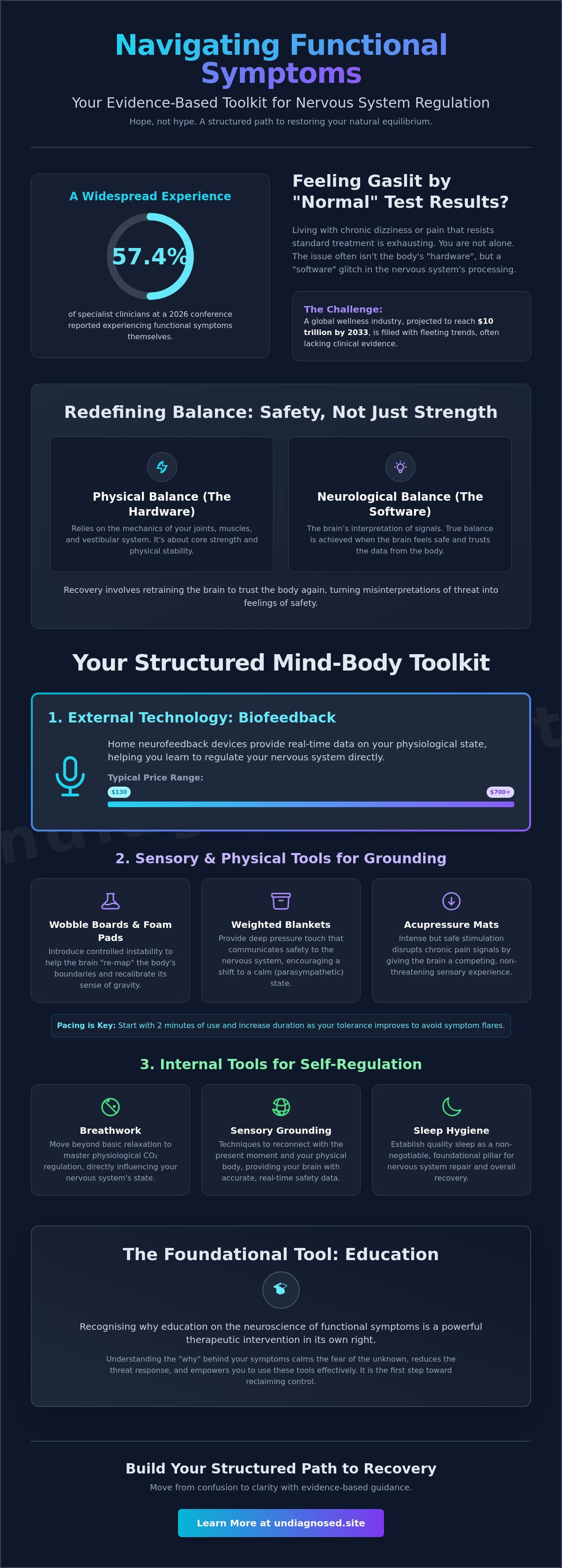
Did you know that 57.4 per cent of specialist clinicians attending a 2026 conference on Functional Neurological Disorder reported experiencing functional symptoms themselves? This data validates the urgent need for effective mind-body balance tools that address the nervous system directly. It's exhausting to feel gaslit by "normal" test results whilst living with chronic dizziness or pain that resists standard treatment. You're likely overwhelmed by a global wellness industry projected to reach $10 trillion by 2033, where empty promises often outweigh clinical evidence.
We believe in hope, not hype. You deserve a structured path to recovery that provides scientific validation for your experience rather than another fleeting trend. This article offers a curated selection of internal somatic techniques and external technology, including home neurofeedback devices that currently range from $130 to $700. We will examine how to regulate your nervous system through biofeedback, breathwork, and sensory grounding to restore your natural equilibrium.
Key Takeaways
- Understand why true balance is a dynamic state of nervous system equilibrium rather than a simple physical measurement of stability.
- Explore how sensory mind-body balance tools, such as wobble boards and weighted blankets, help the brain re-map the body whilst calming the sympathetic nervous system.
- Discover how to move beyond basic relaxation to master physiological CO2 regulation and use sleep hygiene as a foundational recovery pillar.
- Gain a structured framework to organise your recovery toolkit, allowing you to identify primary triggers and select specific resources without feeling overwhelmed.
- Recognise why education regarding the neuroscience of functional symptoms serves as a powerful therapeutic intervention in its own right.
Redefining Mind-Body Balance: Beyond Physical Stability
Balance is frequently reduced to a measure of core strength or the ability to stand on one leg. Whilst athletic stability is important, it represents only the mechanical surface of a much deeper physiological process. For individuals navigating functional symptoms, true balance is a state of nervous system equilibrium. It's the point where the brain feels safe enough to process internal and external signals without triggering a defensive symptom response. This is why effective mind-body balance tools are about safety, not just strength.
We approach recovery through a biopsychosocial lens. This framework acknowledges that biological markers, psychological states, and social environments all converge to dictate how you feel. Because these factors are intertwined, effective mind-body interventions must address more than just the physical frame. When a clinician describes symptoms as "medically unexplained," it doesn't mean they're imaginary. It means the "hardware" of the body is functioning, but the "software" is producing errors. Your brain acts as the control centre; it requires clean, consistent data to maintain order.
The Difference Between Physical and Neurological Balance
Physical balance relies on the mechanics of your joints, muscles, and the vestibular system in your inner ear. Neurological balance is the brain’s interpretation of those signals. Functional symptoms often arise from a software glitch where the brain misinterprets normal bodily sensations as threats. This creates a profound disconnect. You might feel dizzy or unstable even when your physical structures are perfectly healthy. Recovery involves retraining the brain to trust the data it receives from the body again.
Why Your Current Toolkit Might Be Incomplete
Many available resources focus exclusively on the physical, such as core exercises or proprioception drills. Whilst these are useful mind-body balance tools, they often fail if they ignore the underlying stress response. Traditional medical models frequently miss this nuance, leading to a cycle of repetitive tests and patient frustration. We prioritise "Diagnosis, not dismissal," because understanding the neuroscience of your symptoms is the first step toward reclaiming control. An incomplete toolkit leaves you vulnerable to the "quick-fix" industry, but a structured approach provides the stability you actually need. Evidence-based guidance replaces the confusion of the unknown.
Sensory and Physical Feedback Tools for Grounding
Grounding is the process of reconnecting with the present moment and the physical body. When the brain is stuck in a loop of functional symptoms, it often lacks accurate data about its position in space. Mind-body balance tools like wobble boards and cushions serve a higher purpose than mere fitness; they force the brain to "re-map" the body’s boundaries. By introducing a controlled level of instability, these tools demand the brain’s attention. This effectively overrides the "noise" of functional symptoms with high-quality sensory input. It’s a way of giving the brain better data so it can make better decisions about your safety.
For those experiencing heightened stress, weighted blankets and compression garments provide deep pressure touch. This tactile input communicates safety to the sympathetic nervous system, encouraging a shift toward a parasympathetic state. Similarly, acupressure mats stimulate sensory receptors across the back or feet. This intense but safe stimulation can help disrupt chronic pain signals by providing the brain with a competing, non-threatening sensory experience. Success with these tools requires careful pacing. Research into Functional Neurological Disorder, which accounts for up to 16 per cent of new outpatient neurology appointments, suggests that over-exertion can lead to symptom flares. It’s better to start with two minutes of use and gradually increase duration as your tolerance improves.
Proprioceptive Tools for Chronic Dizziness
Chronic dizziness often stems from a mismatch between what your eyes see and what your inner ear feels. Foam pads offer a safe way to retrain this relationship. Standing on an unstable surface whilst focusing on a fixed visual anchor helps the brain recalibrate its sense of gravity. This approach is a core part of The Mind and Body Connection: A Clinical Guide to Functional Health, which emphasises the integration of sensory data for neurological recovery. Using these mind-body balance tools consistently helps reduce the frequency of vertigo episodes.
External Tools for Nervous System Regulation
The market is currently saturated with "vagus nerve stimulators" promising instant relief. Whilst some medical-grade devices show promise, natural stimulation through cold water immersion or rhythmic breathing remains more accessible and evidence-backed for most. These tools work by providing a clear "on-ramp" to the relaxation response. Simple textured "fidget" tools also provide essential grounding during moments of dissociation or sensory overwhelm. When selecting resources, look for "Hope, not hype." If you're ready to dive deeper into these strategies, you can explore our curated resource library for further guidance. Research from the NIH suggests that mind and body practices are most effective when they're tailored to the individual's specific neurological needs rather than applied as a generic solution.
Internal Tools: Self-Regulation and Cognitive Techniques
Whilst physical aids provide external stability, your most powerful mind-body balance tools are those you carry within your own physiology. These internal resources don't require a subscription or a battery; they rely on your ability to consciously influence your nervous system. For many people, the advice to "just relax" feels like another form of medical dismissal. We focus instead on physiological regulation, using specific cognitive and respiratory interventions to signal safety directly to the brain’s alarm centre. This is a skills-based approach to recovery, not a suggestion to ignore your pain.
Cognitive reframing is a vital part of this toolkit. It involves changing the "danger" signal the brain sends during a functional flare-up. When you experience a symptom, your brain is often making a prediction based on past distress. By identifying these patterns, you can begin to categorise sensations as "output" from a sensitive nervous system rather than evidence of new structural damage. This shift from fear to curiosity is a profound therapeutic intervention that helps lower the biological volume of your symptoms over time.
Sleep hygiene also acts as a foundational balance tool. Given that Functional Neurological Disorder (FND) accounts for up to 16 per cent of new outpatient neurology appointments, the need for brain recalibration is clear. Sleep is the primary period during which the brain filters out non-threatening sensory data. Without adequate rest, the brain becomes hyper-vigilant, making it significantly harder to maintain equilibrium. Prioritising a consistent sleep-wake cycle isn't a lifestyle choice; it's a clinical requirement for neurological health.
Breathing Exercises for Acute Symptom Management
Breathing is unique because it's the only part of the autonomic nervous system we can consciously control. Techniques like box breathing or the 4-7-8 method offer a direct "on-ramp" to the parasympathetic nervous system. These aren't just calming exercises; they are scientific mechanisms for improving heart rate variability and regulating CO2 levels. During a functional flare-up, engaging in rhythmic breathing helps stabilise the physiological environment, making it easier for the brain to process sensory input without triggering a defensive response.
The Power of Somatic Tracking
Somatic tracking is the practice of paying neutral, curious attention to physical sensations. Instead of asking "What is wrong?", you learn to ask "What is my brain feeling right now?". This tool is essential for reducing central sensitisation, the process where the nervous system becomes stuck in a high-alert state. According to the NIH on mindfulness techniques, this type of focused awareness can lower blood pressure and reduce anxiety. By observing a symptom without the overlay of fear, you teach your brain that these sensations, whilst uncomfortable, are not dangerous. This gradual retraining is key to long-term recovery and restored mind-body connection.
How to Organise Your Mind-Body Balance Toolkit
Possessing a collection of resources is only half the battle; the real progress lies in how you structure them. An unorganised approach often leads to the "quick-fix" trap where you jump from one device to another without seeing results. To build a sustainable recovery, you must curate your mind-body balance tools into a logical system that accounts for your daily energy fluctuations. This structured methodology provides the stability your nervous system craves, replacing the chaos of the "undiagnosed" state with a clear, actionable plan.
- Step 1: Identify your primary triggers. Categorise these as physical (such as bright lights or loud noises), emotional (work-related stress), or environmental (crowded spaces).
- Step 2: Select your foundation. Start with exactly one physical tool and one internal technique. Choosing more than two initially often leads to cognitive overwhelm, which can actually increase symptom intensity.
- Step 3: Create energy-based versions. Build a "low-energy" toolkit for days when symptoms are high, such as using a weighted blanket, and a "high-energy" version for active retraining, like using a wobble board.
- Step 4: Track functional wins. Measure your progress by what you can do, not just how you feel. Success is walking to the shop or sitting through a meal, even if the underlying sensation is still present.
Building a Morning Routine for Stability
Consistency is more important than intensity. Spending 5 minutes daily on grounding exercises is far more effective for the brain than a single 1-hour session once a week. Start your day with natural light and gentle movement to signal safety to your control centre before the day’s stress response can take hold. This proactive approach ensures you begin from a place of equilibrium rather than playing catch-up with your symptoms. If you're looking for a structured way to implement these habits, you can access our daily habit tracker to stay on course.
Evening Tools for Sleep and Recalibration
Your evening routine should focus on transitioning the body out of "fight or flight" mode. Use temperature regulation and darkness to support hormonal balance, ensuring your brain has the best possible environment for recalibration. For those seeking deeper guidance on integrating these practices into a digital format, see our review on Choosing the Best Mind-Body Online Course for Functional Symptoms in 2026. These mind-body balance tools work best when they're used to bridge the gap between a busy day and restorative rest.
Education: The Ultimate Tool for Mind-Body Connection
Education is often viewed as a secondary "add-on" to treatment. We view it as the primary driver of recovery. Understanding the neuroscience behind your symptoms is a therapeutic intervention in its own right. When you learn that your brain is producing symptoms as a protective response rather than a signal of structural damage, the biological threat level begins to decrease. This cognitive shift is one of the most effective mind-body balance tools available. It moves you from a state of "Undiagnosed" confusion to a position of informed, evidence-based power. You're no longer fighting an invisible enemy; you're managing a sensitive nervous system.
A structured approach to education provides the "Hope, not hype" that is so often missing from the wellness industry. Whilst a wobble board or a weighted blanket provides immediate sensory feedback, it's the cognitive framework that allows these changes to stick. By learning how the brain acts as a control centre, you gain the ability to interpret your body’s signals with clinical distance rather than emotional distress. This transition from being a patient to being an informed advocate for your own health is the turning point in the recovery journey.
The Biopsychosocial Curriculum
Central sensitisation is the mechanism where the nervous system remains in a state of high alert, amplifying signals that the brain should normally filter out. By bridging the gap between clinical neuroscience and your daily experience, you begin to see your symptoms as data rather than danger. This curriculum rejects the "quick-fix" culture in favour of long-term resilience. A 2026 survey of clinicians attending a functional symptom conference found that 57.4 per cent had experienced functional symptoms themselves. This statistic highlights that these experiences are a universal part of human physiology, not a personal failing or a permanent "broken" state. Empowerment comes from understanding the "why" behind the "what."
Next Steps: Taking Control of Your Recovery
The "Mind and Body Connection" framework provides the necessary structure for all other mind-body balance tools. It acts as a roadmap, guiding you through the complexities of the nervous system without the noise of sensationalist marketing. Your recovery journey should involve finding a community or a clinician who understands the biopsychosocial model. This ensures you receive "Diagnosis, not dismissal" at every stage of your progress. Using our book and structured courses as your primary guide allows you to move forward with quiet confidence and integrity.
Your symptoms are genuinely felt and clinically real. However, because they are driven by the nervous system’s "software" rather than its "hardware," they are also changeable. By combining physical feedback, internal regulation, and deep education, you create a comprehensive environment for healing. You are no longer a passive observer of your symptoms; you are the informed architect of your own recovery. The path is structured, the tools are evidence-based, and the progress is within your reach.
Reclaiming Authority Over Your Recovery
Recovery is a skill, not a miracle. We have explored how neurological safety requires a sophisticated blend of sensory feedback and cognitive education. By organising your toolkit based on energy levels and prioritising physiological regulation over "quick-fix" promises, you transform your relationship with your body. These mind-body balance tools are most effective when they're integrated into a structured daily routine that values consistency over intensity. You're no longer a passive observer of your symptoms; you're the informed architect of your own equilibrium.
If you're ready to move beyond the frustration of the "undiagnosed" state, you can explore the "Undiagnosed" Book and Course for a complete mind-body toolkit. This resource was created by Consultant Physician Dr. Csaba Dioszeghy and offers an evidence-based biopsychosocial approach designed specifically for medically unexplained symptoms. It provides the structured roadmap needed to bridge the gap between clinical science and your daily lived experience, offering hope, not hype.
Your symptoms are genuinely felt, but they are also changeable. Recovery is a steady process of retraining the brain and restoring a sense of internal safety. You possess the capacity to recalibrate your nervous system and reclaim your life with confidence and integrity.
Frequently Asked Questions
What are the best mind-body balance tools for beginners?
The best mind-body balance tools for beginners are internal techniques like somatic tracking and basic diaphragmatic breathing. These resources require no financial investment and allow you to begin retraining your nervous system immediately. By focusing on neutral observation of physical sensations, you start to lower the brain's threat response without the risk of sensory overwhelm often associated with complex equipment.
Can mind-body tools really help with chronic pain if my scans are normal?
Mind-body tools are specifically designed for chronic pain that persists despite normal scan results. When imaging shows no structural damage, the pain is often driven by central sensitisation; this is where the nervous system remains in a high-alert state. These tools help recalibrate the brain’s "alarm system," providing relief by addressing the functional software rather than the physical hardware.
How often should I use balance equipment like wobble boards?
You should use balance equipment like wobble boards in short, frequent bursts rather than long sessions. We recommend starting with just 2 minutes, three times per day, to prevent the nervous system from becoming over-stimulated. Consistency is the key to signalling safety to the brain, helping it re-map your body's position in space more effectively than sporadic, intense training.
Is there a difference between mindfulness and mind-body balance tools?
Mindfulness is a general state of awareness, whilst mind-body balance tools are specific, active interventions used to regulate the nervous system. Whilst mindfulness helps you observe symptoms without fear, balance tools like weighted blankets or proprioceptive drills provide the direct sensory input needed to shift out of a stress response. They work together to bridge the gap between cognitive awareness and physiological change.
Can breathing exercises stop a functional neurological flare-up?
Breathing exercises won't always stop a flare-up instantly, but they can significantly lower its physiological intensity. By using rhythmic techniques, you consciously influence your autonomic nervous system to improve heart rate variability. This creates a more stable internal environment, making it easier for the brain to process functional symptoms without escalating into a full defensive response during a crisis.
How do I know if a mind-body tool is evidence-based?
An evidence-based tool is one grounded in the biopsychosocial model and clinical neuroscience rather than sensationalist marketing. Look for resources that explain the scientific mechanism, such as how the tool affects the vestibular system or CO2 regulation. Avoid any product that promises a "miracle cure" or fails to acknowledge that recovery is a steady process of neurological retraining.
Why do I feel more dizzy after using balance tools?
Increased dizziness often suggests your brain is experiencing sensory overload or that your pacing is too aggressive. If the brain receives too much new proprioceptive data at once, it may temporarily increase its threat response. Reduce your practice time by 50 per cent and ensure you're using a fixed visual anchor to help your brain calibrate the incoming signals safely.
Should I talk to my GP before starting a mind-body balance programme?
You should talk to your GP to ensure all structural or traditional neurological causes for your symptoms have been ruled out first. A "Diagnosis, not dismissal" approach is vital for your long-term peace of mind and physical safety. Once a clinician confirms that your symptoms are functional in nature, you can confidently begin a structured programme tailored to your specific neurological needs.