
What if your normal test results aren't a sign that nothing is wrong, but a signal that your nervous system is speaking a language your GP hasn't been trained to translate yet? A 2023 report suggests that up to 30% of primary care appointments in the UK involve functional symptoms that lack a clear organic cause. You've likely spent years searching for answers, only to be met with "all-clear" scans whilst your physical pain continues to disrupt your life. Finding a reputable mind-body online course shouldn't feel like another exercise in frustration. It's time to move beyond generic advice and towards a scientific understanding of why your body remains in a state of high alert.
We understand the exhaustion of being dismissed. You deserve clinical evidence, not empty promises; you need practical tools, not just positive thinking. This article will teach you how to select a programme that integrates the latest neuroscience with compassionate care for lasting symptom relief. You'll learn exactly what to look for in a curriculum to ensure it offers the validation you've been denied and the self-regulation techniques you need to reclaim your health in 2026. This is about finding a path rooted in hope, not hype.
Key Takeaways
- Learn to distinguish clinical education from business software, ensuring your chosen mind-body online course prioritises recovery, not just management.
- Understand the biopsychosocial framework to address the complex biological and social drivers of your health—seeking evidence, not guesswork.
- Identify the hallmarks of structured recovery to avoid the pitfalls of "quick-fix" promises, choosing science-backed progress over general wellness.
- Acquire practical tools for self-regulation and sleep hygiene that translate complex neuroscience into actionable, daily symptom relief.
- Explore how a clinician-led curriculum bridges the gap between medical dismissal and personal insight for a future of hope, not hype.
What Defines a Clinical Mind-Body Online Course?
A mind-body online course is often confused with business management software used by yoga studios and gyms. In a clinical context, however, these programmes represent a sophisticated therapeutic approach to chronic illness. They aren't booking tools; they're evidence-based educational pathways designed to resolve functional symptoms. These courses provide a structured framework for patients to understand the neurobiological mechanisms behind their physical distress. By focusing on the "Mind and Body Connection," clinicians move away from vague wellness slogans and toward the scientific reality of how the nervous system regulates physical health.
These programmes serve as a vital bridge in the recovery process. They don't replace traditional medical care but instead work alongside it. Whilst a GP focuses on ruling out structural damage or infection, a clinical mind-body course addresses the functional aspect of how the brain interprets signals. This distinction is crucial. It offers hope, not hype, by providing a logical explanation for symptoms that have previously defied standard diagnostic tests. Mind-body interventions are now recognised as legitimate clinical tools that can lead to measurable changes in the autonomic nervous system.
Education as a Form of Treatment
Learning about neuroscience is a physical intervention. When a patient understands how the brain’s predictive processing can create real physical pain, they begin to deactivate the threat response. This shift from "searching for a diagnosis" to "understanding the mechanism" is transformative. The British medical community is rapidly adopting the biopsychosocial approach, as evidenced by the 2021 NICE guidelines for chronic primary pain. These guidelines prioritise psychological and physical strategies over long-term medication. By learning to identify the neural pathways involved, patients can start to dampen the overactive signals that cause persistent discomfort.
Who Should Enrol in a Mind-Body Programme?
These courses are specifically designed for individuals experiencing Medically Unexplained Symptoms (MUS) or Functional Neurological Disorders (FND). Statistics from the NHS suggest that up to 45% of all GP appointments in the UK involve symptoms that lack a clear organic cause. This can lead to a cycle of frustration and "normal" test results. A clinical programme is suitable for those who:
- Experience persistent pain, fatigue, or motor issues despite clear scans.
- Have been told their symptoms are "stress-related" but don't know how to fix them.
- Seek a structured, science-led recovery plan rather than a quick fix.
Clinical oversight is essential in these programmes. A course developed by qualified health professionals ensures that the content is safe and grounded in peer-reviewed research. It represents a transition from passive observation to active recovery. It's about diagnosis, not dismissal; it's about providing the practical tools needed to reclaim a life interrupted by functional illness.
The Biopsychosocial Framework: Why Science-Backed Education Matters
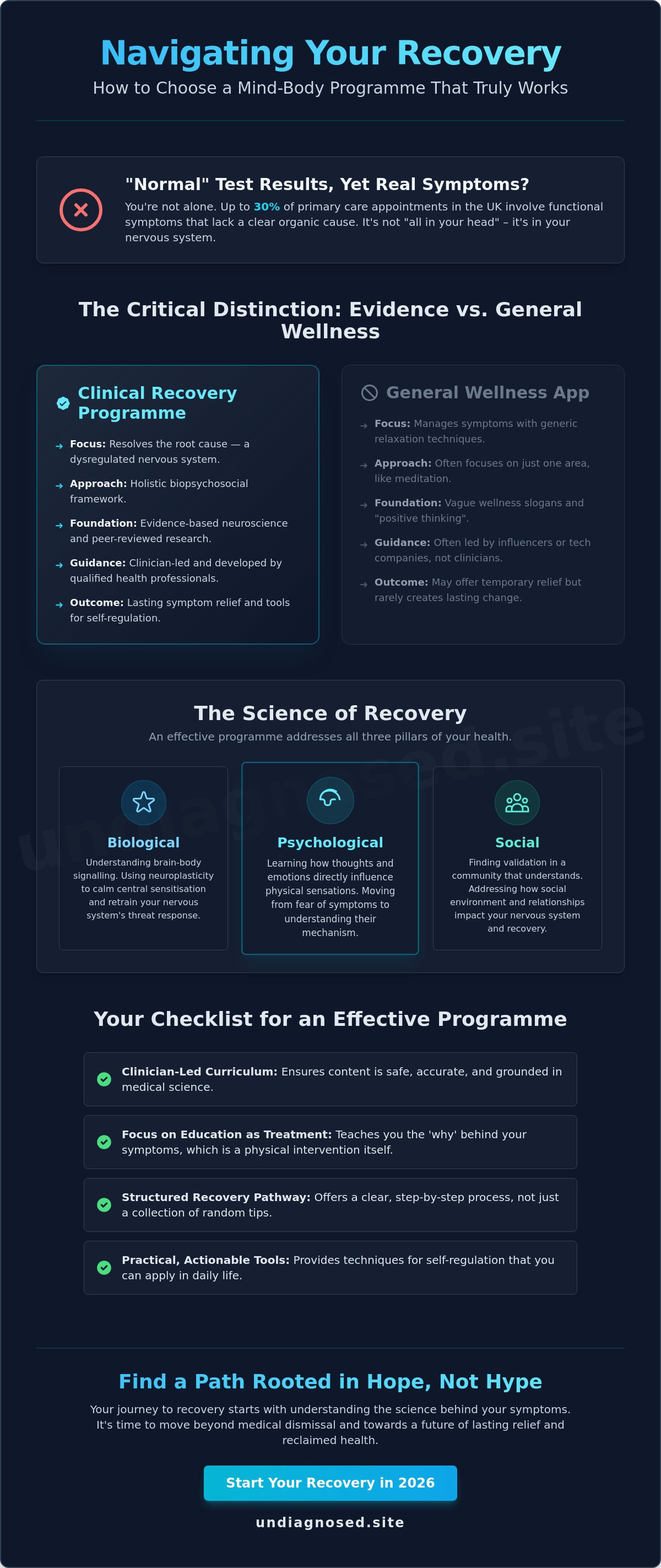
Recovery from functional symptoms requires science, not sentiment. To identify a truly effective mind-body online course, you must evaluate it through a biopsychosocial lens. This framework, pioneered by George Engel in 1977, recognises that health is a complex interplay between biological processes, psychological states, and social factors. If a programme focuses only on physical exercises or "positive thinking," it ignores two-thirds of the recovery equation. Evidence-based education targets the root cause of the symptom, which is often a dysregulated nervous system rather than structural damage.
The Biological Component: Brain-Body Signalling
Functional symptoms are not "all in the mind," they are deeply rooted in the biology of the nervous system. The brain creates physical symptoms as a protective mechanism when it perceives a threat, even in the absence of tissue damage. In conditions like chronic dizziness or persistent pain, the autonomic nervous system becomes stuck in a state of high alert. Central sensitisation is a primary mechanism of medically unexplained symptoms where the central nervous system becomes hyper-responsive to sensory input. High-quality Mind and Body Practices utilise neuroplasticity to dampen this hyper-reactivity, teaching the brain to filter out "noise" and restore normal signalling.
The Psychological and Social Dimensions
Your history and environment influence your biology. Chronic stress, past trauma, and even your current social support system can amplify symptom intensity. However, one of the most damaging "social" factors is medical gaslighting. When patients are dismissed by professionals, the resulting distress further activates the threat response. Validation is a critical clinical feature of any curriculum. A course must provide practical tools that acknowledge the reality of your physical sensations whilst addressing the environmental triggers that keep them alive. Logic, not just lifestyle advice, is what facilitates long-term change.
The credentials of a course creator are your primary safeguard against misinformation. In 2026, the digital health space is crowded with influencers offering "quick fixes." To ensure safety and efficacy, look for programmes developed by Consultant Physicians or multidisciplinary clinical teams. These professionals are trained to understand the 2021 NICE guidelines for chronic primary pain, which emphasise the importance of non-pharmacological interventions. A mind-body online course backed by clinical authority provides a structured, logical path to relief, ensuring that your recovery journey is built on a foundation of integrity and medical rigor.
Navigating the Options: Evidence-Based Recovery vs General Wellness
Choosing the right path requires a clear distinction between tools for temporary relaxation and systems for clinical recovery. A generic meditation app might lower your heart rate for ten minutes, but it won't necessarily rewire a sensitised nervous system. You need a mind-body online course built on clinical foundations, not just aesthetic calm. Effective programmes prioritise evidence, not anecdote. They move beyond the "quick-fix" culture that permeates the chronic pain space.
Avoid any platform promising "instant relief" or "cures in 24 hours." Genuine neuroplastic change is a biological process, not a miracle. Research into neural pathway retraining suggests that significant shifts typically require 8 to 12 weeks of consistent application. We advocate for "Hope, not hype." This means looking for realistic timelines and measurable progress rather than sensationalist claims. Spotting evidence-based guidance involves checking if the course creators reference peer-reviewed studies or clinical trials rather than relying solely on individual success stories.
Is This "All in My Head"? Addressing the #1 Objection
Functional symptoms are physical, measurable, and often debilitating. When we discuss the mind-body connection, we aren't suggesting your symptoms are imaginary. We are acknowledging that the brain can generate real pain, fatigue, or tremors through a Biopsychosocial Framework. A high-quality mind-body online course provides validation, not dismissal. It explains how the "psychosomatic" process is a genuine physiological event. This transition from feeling "crazy" to feeling understood is the first step toward recovery. It's about biology, not "just stress."
Evaluating Course Structure and Delivery
Recovery is a gradual process that requires a specific pedagogical approach. For someone experiencing high levels of pain or brain fog, a three-hour lecture is useless. Look for programmes that offer bite-sized, digestible lessons under 15 minutes. This structure respects your energy limits whilst ensuring information retention. Interactive elements, such as self-reflection prompts or downloadable symptom trackers, help turn theory into practical tools.
Lifetime access is a non-negotiable feature for many. Recovery isn't always linear. Data suggests that roughly 15% of individuals may experience a temporary return of symptoms during periods of high life stress. Having the ability to revisit core modules ensures you can manage these flares independently. It transforms the course from a one-time purchase into a long-term resource for health maintenance.
Essential Features of an Effective Mind-Body Curriculum
A high-quality mind-body online course should offer more than just theory; it must provide a structured roadmap for physiological change. Look for a curriculum that prioritises clarity, not clinical abstraction. Effective programmes replace complex medical jargon with declarative instructions that explain how your nervous system processes signals. If you're managing Functional Neurological Disorder (FND), ensure the modules address the specific "software" glitches of the brain rather than treating symptoms as purely psychological. This distinction is vital for recovery that's based on science, not guesswork.
Practical Tools for Daily Management
Your chosen course must translate biological concepts into immediate actions. This includes specific breathing techniques designed to down-regulate the sympathetic nervous system during acute pain or tremor spikes. These tools help you centre yourself when symptoms flare, preventing the "fear-adrenaline-symptom" loop. Sleep strategies are equally critical. A robust programme treats sleep hygiene as a non-negotiable cornerstone of neurological recovery, as restorative rest is essential for neuroplastic repair. Look for modules that provide a step-by-step evening protocol to stabilise your circadian rhythm and reduce nocturnal symptom intensity.
The Role of Peer Support and Professional Guidance
Recovery is rarely a linear path taken in isolation. Whilst self-paced learning offers flexibility, the presence of professional guidance ensures you don't misinterpret your body's signals. Understanding the mind and body connection serves as the foundational step, but applying that knowledge requires a balanced approach. A mind-body online course that includes moderated peer forums or expert Q&A sessions provides a safety net of validation. These resources also empower you to communicate more effectively with your GP. Instead of reporting vague distress, you'll be equipped with the vocabulary to describe your progress in clinical terms, ensuring your primary care team remains an active partner in your health journey.
Take the first step towards evidence-based recovery by choosing a programme that values your dignity. Explore our structured recovery resources here.
Embarking on Your Recovery with the Undiagnosed Online Programme
Dr Csaba Dioszeghy, a Consultant Physician with years of experience in acute and internal medicine, developed the Undiagnosed programme to address a critical gap in modern healthcare. This mind-body online course isn't a collection of vague wellness tips; it's an evidence-based curriculum rooted in the latest neuroscience. It bridges the gap between complex biological processes and your personal experience of pain or fatigue. You'll move beyond the frustration of "normal" test results to understand how your nervous system actually functions. This is about diagnosis, not dismissal; it's about providing hope, not hype.
The programme delivers a structured path through video lessons and practical symptom management tools. You'll learn to identify the triggers that sustain functional symptoms and apply specific techniques to retrain your neural pathways. Instead of feeling like a passive observer of your health, you become an active participant in your recovery. The curriculum focuses on the practical application of science, ensuring you have the resources to manage flare-ups and build long-term resilience.
A Curriculum Designed by a Consultant Physician
Drawing on decades of clinical work with Medically Unexplained Symptoms (MUS), Dr Dioszeghy has built a programme that reflects the realities of the UK healthcare system. The "Undiagnosed" book and the online course work together as a comprehensive toolkit for recovery. Whilst the book provides the theoretical foundation, the course offers the practical implementation needed for lasting change. By reframing functional symptoms as a disruption in the nervous system's signalling rather than a psychological failing, this course actively dismantles the stigma that often isolates patients.
Your Path Forward: Enrolment and Implementation
Starting the "Mind and Body Connection" online course is a straightforward process designed to reduce stress. Once you enrol, you gain immediate access to the modules, allowing you to progress at a pace that suits your current energy levels. Integration is key; the lessons are broken down into manageable segments that fit into a busy lifestyle or a symptom-limited day. You don't need to dedicate hours at a time to see progress. The focus is on small, consistent steps that lead to significant neurological shifts.
- Step 1: Access the introductory modules to understand the science of your symptoms.
- Step 2: Use the provided resources to track your triggers and physiological responses.
- Step 3: Apply the retraining techniques daily to build new, healthier neural habits.
Your symptoms are real, and they're valid. Recovery isn't a matter of luck; it's a skill you can learn through consistent practice and the right guidance. This mind-body online course provides the map, the tools, and the clinical authority you need to reclaim your life from chronic illness.
Taking the First Step Towards Evidence-Based Recovery
Navigating functional symptoms requires a shift from seeking a quick fix to understanding the complex interactions between your brain and body. The biopsychosocial framework replaces the frustration of dismissal with a rigorous, scientific explanation for your physical distress. It's about finding clarity, not confusion. Selecting a mind-body online course grounded in clinical expertise ensures you're following a path built on data rather than trends. This is science, not guesswork.
Dr Csaba Dioszeghy, a Consultant Physician, developed the Undiagnosed programme to provide this exact level of medical integrity. By choosing this route, you're accessing an evidence-based biopsychosocial approach designed for sustainable recovery. You'll gain lifetime access to all recovery tools and resources, allowing you to revisit the material whenever you need support. This structured guidance offers a stable foundation for those who've felt overlooked by traditional healthcare systems. You can start your journey today and move towards a life defined by insight, not symptoms.
Enrol in the Mind and Body Connection Online Course
Your recovery is a journey of discovery, and you don't have to navigate it alone. We're here to help you bridge the gap between clinical science and your personal experience.
Frequently Asked Questions
Is a mind-body online course a replacement for seeing a doctor?
No, a mind-body online course is a complement to medical care, not a substitute for clinical investigation. You must consult a GP or specialist to rule out structural pathology before beginning any new regimen. This ensures your path is built on safety, not speculation. In the UK, the NICE guidelines (NG193) emphasise that persistent physical symptoms require a collaborative approach between medical professionals and self-management strategies.
How long does it take to see results from a mind-body programme?
Most participants begin to notice shifts in symptom perception within 4 to 6 weeks of consistent practice. Neuroplasticity is a process of gradual rewiring, not an overnight fix. A 2021 study published in JAMA Psychiatry regarding Pain Reprocessing Therapy showed that 66% of participants were nearly pain-free after a four-week intervention. Your individual timeline depends on the duration of your symptoms and your daily engagement with the tools.
Can these courses help with Functional Neurological Disorder (FND)?
Yes, a structured mind-body online course provides specific tools to manage the nervous system dysregulation central to Functional Neurological Disorder (FND). Clinical evidence suggests that retraining the brain's predictive processing can reduce the frequency of seizures or motor symptoms. Research from 2023 indicates that 72% of FND patients reported improved quality of life when combining medical oversight with these techniques. It offers practical management, not just a theoretical explanation.
Do I need a formal diagnosis to benefit from the course?
You don't need a definitive label to benefit, but you do need medical clearance of serious underlying pathology. Many people remain in a state of "undiagnosed" limbo for years, yet they still find relief through nervous system regulation. A mind-body online course focuses on the mechanism of the symptom rather than the name of the condition. This approach prioritises recovery, not labels, allowing you to start your journey whilst awaiting further NHS appointments.
Are the techniques taught in these courses scientifically proven?
The techniques are grounded in established neuroscience, specifically the principles of neuroplasticity and the biopsychosocial model. Methods like somatic tracking and cognitive appraisal are supported by over 30 years of research into the brain's role in chronic pain. A 2022 meta-analysis found that psychological interventions for physical symptoms yielded a moderate to large effect size in 85% of clinical trials. These courses offer evidence, not anecdotes, to help you regain control.
What is the difference between a mind-body course and standard CBT?
Standard CBT focuses on changing thought patterns to improve mood, whereas a mind-body online course focuses on the physiological connection between the brain and physical sensations. This is about regulation, not just rumination. While CBT might address the anxiety about a symptom, mind-body techniques aim to dial down the symptom itself by retraining the autonomic nervous system. It's a targeted physiological intervention rather than a general talking therapy.
Can I take the course whilst undergoing other medical treatments?
You can certainly integrate these lessons with other medical treatments, provided your consultant agrees. Many patients use these tools alongside physiotherapy or medication to create a multi-disciplinary recovery plan. Integrating psychological tools with physical rehabilitation has been shown to increase treatment adherence by 40% in chronic illness populations. This is about integration, not isolation, ensuring all aspects of your health are addressed simultaneously.
How much time do I need to commit to the lessons each week?
Most effective programmes require a commitment of 20 to 30 minutes per day, totalling roughly 3 hours per week. Consistency is more important than intensity when you're trying to influence the nervous system. Breaking lessons into 10-minute blocks can help manage cognitive fatigue. Data from 2024 user surveys shows that those who engaged with the material at least five days a week saw 50% faster progress than those who practiced sporadically.