
What if your persistent swaying isn't a sign that your body is failing, but evidence that your brain is overprotecting you? You likely find yourself asking why you still feel dizzy when your doctors say all your tests are normal. As of May 2026, clinical insights suggest that chronic dizziness is often a software glitch in brain processing, not a hardware failure in the ear. This gap between your physical reality and your clear scans is exactly where chronic dizziness self-help begins. It's a journey toward recovery, not just restraint.
We understand the frustration of feeling dismissed by clinicians or the paralysing anxiety of losing control whilst in a crowded high street. You deserve a logical explanation for why your world feels tilted when your scans are clear. This guide provides a biopsychosocial framework to help you retrain your brain and reclaim your balance using evidence-based mind-body tools. We will explore practical techniques to reduce symptom intensity and provide a structured roadmap to return you to the activities you love.
Key Takeaways
- Distinguish between the spinning of acute vertigo and the rocking or swaying of functional conditions like PPPD to find the right treatment path.
- Understand the role of "central sensitisation" and why your brain may be amplifying movement signals despite clear medical scans.
- Learn why effective chronic dizziness self-help must address the "high alarm" state of the nervous system to make physical rehabilitation successful.
- Discover how to build a structured daily routine using gentle exposure and safety signals to retrain your brain’s balance processing.
- Shift your perspective from short-term symptom management to a long-term recovery strategy rooted in the mind and body connection.
Understanding Chronic Dizziness: Diagnosis, Not Dismissal
Searching for answers often leads to a frustrating dead end in the consultant's office. You describe a world that feels like it's shifting, rocking, or swaying; yet your MRI is pristine and your blood tests are perfect. For many, this leads to a sense of medical gaslighting. However, a "normal" scan is actually the first step in effective chronic dizziness self-help. It doesn't mean your symptoms are imaginary. It simply confirms that the physical structure of your brain and ears is intact, suggesting the issue lies in how your brain processes balance information.
Research indicates that over 11 million people suffer from persistent balance issues, many of whom are eventually diagnosed with Persistent Postural-Perceptual Dizziness (PPPD). This condition isn't about a damaged inner ear; it's a functional disorder where the nervous system remains in a state of high alert. Your brain has essentially "forgotten" how to filter out normal movement, turning every slight shift into a perceived threat. Validation is the first step toward relief. Your symptoms are 100% real, even if they aren't visible on a scan.
The Difference Between Vertigo and Functional Dizziness
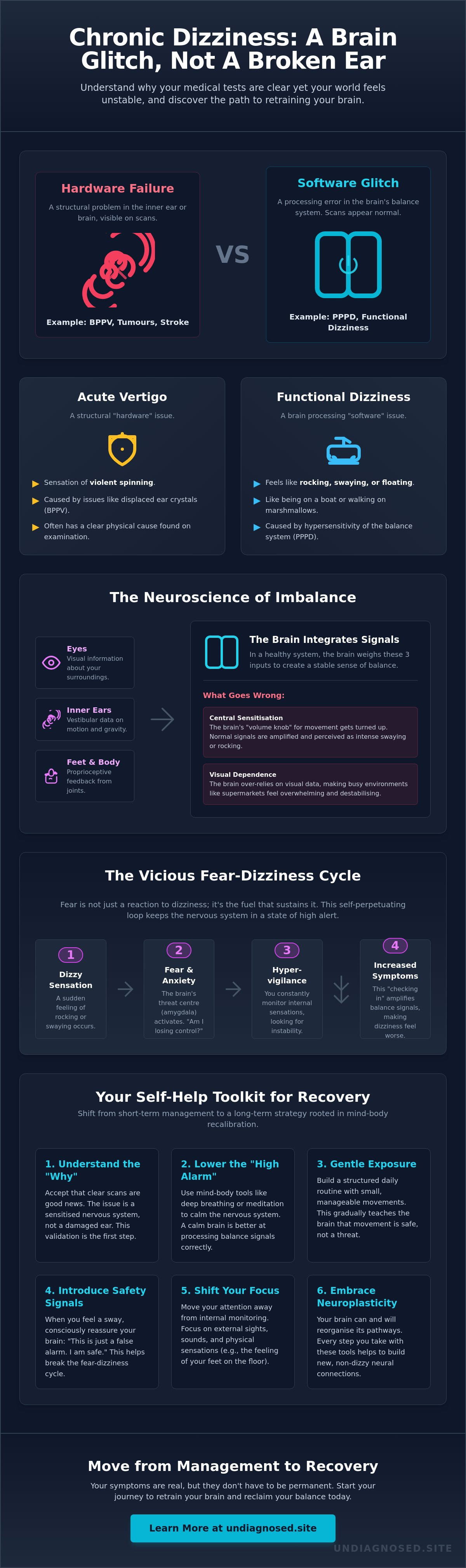
It's vital to distinguish between acute vertigo and functional dizziness. Vertigo is typically a structural "hardware" issue, such as Benign Paroxysmal Positional Vertigo (BPPV), where crystals in the ear are displaced. It causes a violent spinning sensation. Functional dizziness is different. It's a hypersensitivity of the balance system. Instead of spinning, you might feel like you're on a boat or walking on marshmallows. This happens when the brain becomes over-focused on balance signals, amplifying data that it should normally ignore. It's a state of being "over-aware" of your own orientation in space.
Why Your Medical Tests Come Back Clear
Modern imaging like MRIs and CT scans are designed to find tumours, strokes, or physical damage. They're excellent at identifying hardware failures but often miss software glitches. Think of your nervous system as a computer. Your hardware is fine, but the operating system is running a "dizziness" programme that won't shut down. This is why a biopsychosocial lens is so effective. It looks at the biological triggers, the psychological state of the nervous system, and the social impact of the condition. By shifting your focus from "fixing a broken ear" to "recalibrating a sensitive brain," you move from a state of dismissal to a place of empowered recovery. Understanding this distinction is the foundation of any successful chronic dizziness self-help strategy.
The Neuroscience of Balance: How Your Brain Creates Dizziness
Balance is a silent achievement. It relies on a constant, rapid-fire dialogue between three primary sources: your eyes, your inner ears, and the proprioceptive sensors in your feet. Clinicians refer to this integration as sensory weighting. In a healthy system, the brain seamlessly adjusts how much it trusts each source based on your surroundings. When you're walking on uneven grass, it relies more on your ears; whilst on a stable pavement, it trusts your feet. However, in the context of chronic dizziness, this internal weighing system becomes skewed. The brain often begins to over-rely on visual information, a state known as visual dependence, which makes busy environments like supermarkets feel overwhelming.
This dysfunction is often driven by central sensitisation. This is when the brain’s interpretation of movement becomes too "loud." Normal signals that should be processed in the background are suddenly amplified and perceived as intense swaying or rocking. When seeking dizziness diagnosis and treatment, it's common to find that while the hardware of the ear is functional, the software of the brain is overreacting. The amygdala, your brain's threat-detection centre, begins to treat these sensations as genuine dangers. This creates a state of high neural arousal, keeping your balance system on a "tripwire" setting. Neuroplasticity is the brain’s ability to reorganise its neural pathways to reduce symptom intensity.
The Fear-Dizziness Cycle
Fear isn't just a reaction to dizziness; it's the fuel that sustains it. When you feel a sudden sway, your nervous system enters a state of high arousal. This triggers hyper-vigilance, where you begin to monitor your internal sensations with obsessive detail. This constant "checking in" actually increases the feeling of instability. The more you worry about falling or losing control in public, the more the brain prioritises balance signals, making the dizziness feel more frequent and intense. It's a self-perpetuating loop that makes chronic dizziness self-help feel impossible without addressing the underlying nervous system alarm.
Neuroplasticity and Recovery
The same mechanism that allowed your brain to "learn" this dizzy pattern can be used to unlearn it. Recovery relies on habituation, the process of repeatedly exposing the brain to movement in a safe, controlled way until it stops overreacting. By lowering the threat level, you allow the nervous system to recalibrate its sensory weighting. Understanding the mind and body connection is essential for this transition. If you're looking for a structured way to begin this recalibration, you might consider the resources available through Undiagnosed to help bridge the gap between clinical theory and daily relief.
Comparing Recovery Strategies: Vestibular Rehab vs. Mind-Body Tools
Traditional Vestibular Rehabilitation Therapy (VRT) is often the first port of call for patients seeking relief. VRT relies on a "bottom-up" approach, using specific physical movements to force the brain to compensate for perceived balance deficits. Whilst this is effective for acute inner ear damage, it often falls short for those with functional conditions like PPPD. If your nervous system is in a state of high alarm, these exercises can feel like an assault rather than a remedy. Pushing through intense symptoms frequently leads to a "boom-and-bust" cycle, where a few minutes of exercise results in days of exhaustion and increased swaying. Successful chronic dizziness self-help requires a shift from purely physical challenge to a balanced integration of movement and safety.
Evidence suggests that physical exercises alone fail when the brain’s threat-detection system is overactive. To achieve long-term symptom reduction, you must combine "bottom-up" physical habituation with "top-down" nervous system regulation. This dual approach ensures that you aren't just training your balance; you're teaching your brain that movement is safe. By prioritising stability and calm, you create the necessary environment for neuroplasticity to take hold, moving beyond temporary management toward genuine recovery.
When Traditional Exercises Aren’t Enough
If you find that your VRT exercises leave you feeling nauseous, exhausted, or "spaced out" for hours afterward, your system is likely over-stimulated. This is a sign that your brain is interpreting the exercises as a threat rather than a learning opportunity. You cannot force a sensitised brain to habituate through grit alone. This is why chronic pain validation and symptom acknowledgement are so important. Validating that your experience is real, even when scans are clear, lowers the internal alarm and allows you to engage with movement from a place of safety rather than fear.
The Biopsychosocial Advantage
The biopsychosocial model offers a more sustainable path than the "quick-fix" mentality of pharmaceutical prescriptions. It addresses the three pillars of health: biological factors like sleep and hydration; psychological factors such as your beliefs about your symptoms; and social factors including work stress or isolation. By addressing these areas, you reduce the total load on your nervous system. This holistic chronic dizziness self-help strategy focuses on "hope, not hype," providing you with the tools to manage your recovery journey with agency and precision. When you lower the background noise of stress and poor sleep, your brain’s ability to process balance signals improves naturally.
Your Chronic Dizziness Self-Help Toolkit: A Step-by-Step Guide
Recovery is not found in avoiding movement. Whilst many conventional guides suggest resting until symptoms subside, this avoidance behaviour often reinforces the brain's fear of activity. Effective chronic dizziness self-help requires a structured approach that prioritises safety over speed. By using specific mind-body balance tools, you can begin to lower your system's baseline alarm level. This toolkit is designed to move you from a state of reactive panic to proactive recalibration.
Step 1: Regulating the Nervous System
Before you challenge your balance, you must stabilise your nervous system. Diaphragmatic breathing is a clinical necessity, not a relaxation luxury. By breathing deeply into the abdomen, you stimulate the vagus nerve and signal to the brain that there's no immediate physical threat. Pair this with the "5-4-3-2-1" grounding technique. Identify five things you see, four you can touch, three you hear, two you smell, and one you can taste. This shifts your focus from internal swaying to the external environment. Consistency is vital. Engaging in these exercises for just two minutes, three times a day, is more effective than a single long session once a week.
Step 2: Graded Exposure and Movement
Once regulated, begin micro-movements. Start by moving only your eyes whilst keeping your head still, then progress to gentle head turns. Use the "stop-light" method to pace your progress. Green means your symptoms are stable; keep going. Amber means dizziness has increased slightly; pause and regulate your breathing until it settles. Red means symptoms are overwhelming; stop and return to Step 1. Walking in "safe" environments, such as a quiet hallway or a familiar garden, helps rebuild confidence in your somatosensory system without over-stimulating your visual sensors.
Step 3: Optimising Lifestyle for Balance
Your lifestyle choices act as the background noise for your nervous system. Poor sleep directly increases vestibular sensitivity, making you more prone to dizzy spells. Organising a diet that prevents blood-sugar crashes is equally important, as hypoglycaemia can mimic the light-headedness of a vestibular flare. Additionally, reduce digital eye strain. Staring at screens for extended periods aggravates visual-vestibular conflict, making it harder for your brain to ignore "noise" in your field of vision. High-tech balance assessment platforms like the Bertec system, which can cost upwards of £8,000, are excellent diagnostic aids, but your daily habits are what sustain recovery.
When a "dizzy spike" occurs, remember it's a temporary software glitch, not a sign of new damage. Instead of bracing your muscles, try to soften your shoulders and return to your grounding tools. To deepen your understanding of these techniques and build a personalised recovery plan, you can explore the Mind and Body Connection Online Course today. Taking agency over your recovery is the most powerful tool you possess.
Moving from Management to Recovery: The Undiagnosed Approach
The transition from "coping with dizziness" to "retraining the brain" represents a fundamental shift in your recovery journey. Many patients spend years in a state of hyper-vigilance, reacting to every sway with fear and bracing. This is a survival strategy, not a recovery one. True chronic dizziness self-help moves beyond short-term symptom suppression and focuses on the long-term recalibration of the nervous system. At Undiagnosed, we operate under Dr. Csaba Dioszeghy’s philosophy: "Hope, not hype." We don't promise miracle cures; we provide a grounded, scientific roadmap for those who feel stuck in the medical "no man's land" of medically unexplained symptoms.
Recovery is not about waiting for the dizziness to vanish before you start living. It's about reducing the threat value of the sensations so that your brain can finally stop prioritising them. When you understand that your symptoms are a result of neuroplasticity gone wrong, you realise that the same mechanism can be used to set things right. This is the difference between management and resolution. We aim to provide you with the evidence-based guidance needed to turn a confusing physical experience into a manageable, logical process of healing.
The Power of Evidence-Based Education
Education is often the most overlooked tool in clinical practice. However, understanding the "why" behind your rocking or swaying is what ultimately lowers the internal alarm. When you can identify a dizzy spell as a functional processing error rather than a sign of impending collapse, you strip the symptom of its power. The curriculum in our resources bridges the gap between complex neuroscience and your daily life, translating clinical theory into practical, actionable steps. By becoming an expert in your own mind-body connection, you move from being a passive recipient of care to an active participant in your own health. This intellectual clarity is a prerequisite for physical stability.
Next Steps on Your Journey
If you feel dismissed by previous clinicians, it's important to approach your next consultation with a focus on functional health. Discuss your symptoms with your GP through the lens of Persistent Postural-Perceptual Dizziness (PPPD) or central sensitisation. This helps move the conversation away from "ruling out" diseases and toward "ruling in" a functional recovery plan. For those seeking a structured environment to apply these principles, the book Undiagnosed - The Mind and Body Connection and our comprehensive Online Course provide the necessary framework for progress. Remember that recovery is a process of gradual improvement, not a straight line. There will be setbacks, but with the right tools and a grounded perspective, you can reclaim your balance and your life.
Reclaiming Your Steady Ground
Recovery from persistent swaying or rocking isn't a matter of luck; it's a result of deliberate, evidence-based action. You've discovered that clear medical scans aren't a dismissal, but a confirmation that your hardware is intact. By understanding sensory weighting and the "threat-detection" role of the amygdala, you can begin to lower your nervous system's alarm. Effective chronic dizziness self-help bridges the gap between physical movement and mental regulation, ensuring your brain feels safe enough to recalibrate its balance processing.
If you're ready to move beyond temporary coping and toward lasting stability, we're here to guide you. Dr. Csaba Dioszeghy provides evidence-based guidance designed specifically for those navigating medically unexplained symptoms. You deserve compassionate validation, not clinical dismissal. Explore the Undiagnosed Online Course for structured mind-body recovery and take the first step toward a life no longer defined by the tilt of the world. Recovery is a process of steady progress, and you don't have to navigate it alone.
Frequently Asked Questions
Is chronic dizziness a sign of a serious underlying condition if my MRI is clear?
A clear MRI is positive evidence that the physical structure of your brain is healthy and free from tumours or stroke. It indicates that your symptoms are functional rather than structural; it's a software glitch in your nervous system rather than a hardware failure. This shift in perspective is a core part of chronic dizziness self-help, as it moves the focus from life-threatening pathology toward neural recalibration.
Can anxiety really cause me to feel like I am swaying or rocking?
Anxiety directly influences the vestibular system by triggering the amygdala's threat-detection response. This high-arousal state causes the brain to amplify normal movement signals, making you feel as though you're rocking even when stationary. It's a physiological feedback loop where hyper-vigilance towards your body sensations actually increases the perceived intensity of the swaying. It's a physical response to a sensitised nervous system, not an imaginary symptom.
How long does it take to retrain the brain to stop feeling dizzy?
Neural pathways typically require 12 to 24 weeks of consistent habituation to reorganise effectively. Neuroplasticity is a gradual process of progress, not an overnight fix. Your recovery speed depends on how consistently you apply regulation tools and lower your system's baseline alarm level. Many patients notice a 30% to 50% reduction in symptom intensity within the first three months of structured mind-body practice.
What is PPPD and how is it different from normal vertigo?
Vertigo involves a violent spinning sensation often caused by inner ear "hardware" issues like BPPV. In contrast, Persistent Postural-Perceptual Dizziness (PPPD) is a functional condition characterised by persistent rocking, swaying, or light-headedness. Whilst vertigo is often episodic and triggered by head movements, PPPD is a chronic state of sensory mismatch where the brain is over-relying on visual cues for balance.
Should I stay in bed when I feel dizzy or try to move around?
Bed rest is generally counterproductive for functional dizziness. Prolonged inactivity prevents the brain from habituating to movement and reinforces avoidance behaviours that keep the nervous system in a state of alarm. You should aim for gentle, graded exposure whilst using grounding tools to maintain a sense of safety. Movement is the medicine that teaches your brain that the world is stable.
Can breathing exercises actually help with physical balance issues?
Diaphragmatic breathing is a clinical tool that lowers your heart rate and signals safety to the brain. By reducing the "high alarm" state of the nervous system, you lower the background noise that interferes with balance processing. This creates the internal stability necessary for physical rehabilitation to be effective. It's about calming the processor so the balance signals can be interpreted correctly.
What should I do if my doctor says there is nothing wrong but I still feel unwell?
If scans are clear but symptoms persist, you aren't at a dead end; you're at the beginning of a functional diagnosis. Ask your clinician about the biopsychosocial model or PPPD. This approach validates your physical experience whilst acknowledging that the cause is a processing error rather than structural damage. Seeking chronic dizziness self-help resources can provide the logical explanation you need when traditional tests fail.
Is it possible to fully recover from functional neurological symptoms?
Full recovery is achievable through structured brain retraining and nervous system regulation. By using evidence-based strategies, you can teach your brain to ignore the "dizzy" programme it has learned. Many individuals return to their normal activities, including driving and working in busy environments, once they understand how to manage their neural arousal. It's a journey of recalibration that restores your sense of agency and balance.