
What if the reason your medical tests keep coming back "normal" isn't because you're healthy, but because the tests are looking at only one third of the picture? It's exhausting to feel your body's distress whilst being told everything is fine on paper. You deserve validation, not dismissal; science, not speculation. When symptoms are medically unexplained, it's easy to feel lost amongst conflicting holistic advice. However, the solution lies in integrated biopsychosocial resources that honour the complex link between your biology, your psychology, and your social environment.
We agree that your physical experience is real and deserves a rigorous, scientific explanation. In this guide, you'll discover evidence-based tools to help you manage your symptoms through a proven mind-body lens. With 23% of adults reporting mental health struggles in 2025, the need for clarity and structured support is urgent. We'll explore how frameworks like the DSM-5-TR and tools such as the PHQ-9 provide a path to recovery that is both logical and empathetic. You'll gain a clear understanding of the biopsychosocial model and practical tools for your daily life, moving you from confusion to a state of informed, grounded hope.
Key Takeaways
- Transition from a traditional biomedical model to an integrated framework that treats the person, not just the pathology.
- Gain insight into the neuroscience of central sensitisation to understand how an overactive nervous system generates physical distress.
- Learn to navigate medical consultations with confidence, ensuring you receive clinical collaboration, not professional dismissal.
- Access evidence-based biopsychosocial resources that map the connection between your emotional history and your current physical symptoms.
- Determine whether a foundational book or a structured online course is the most effective vehicle for your personal mind-body recovery.
What are Biopsychosocial Resources and Why Do They Matter?
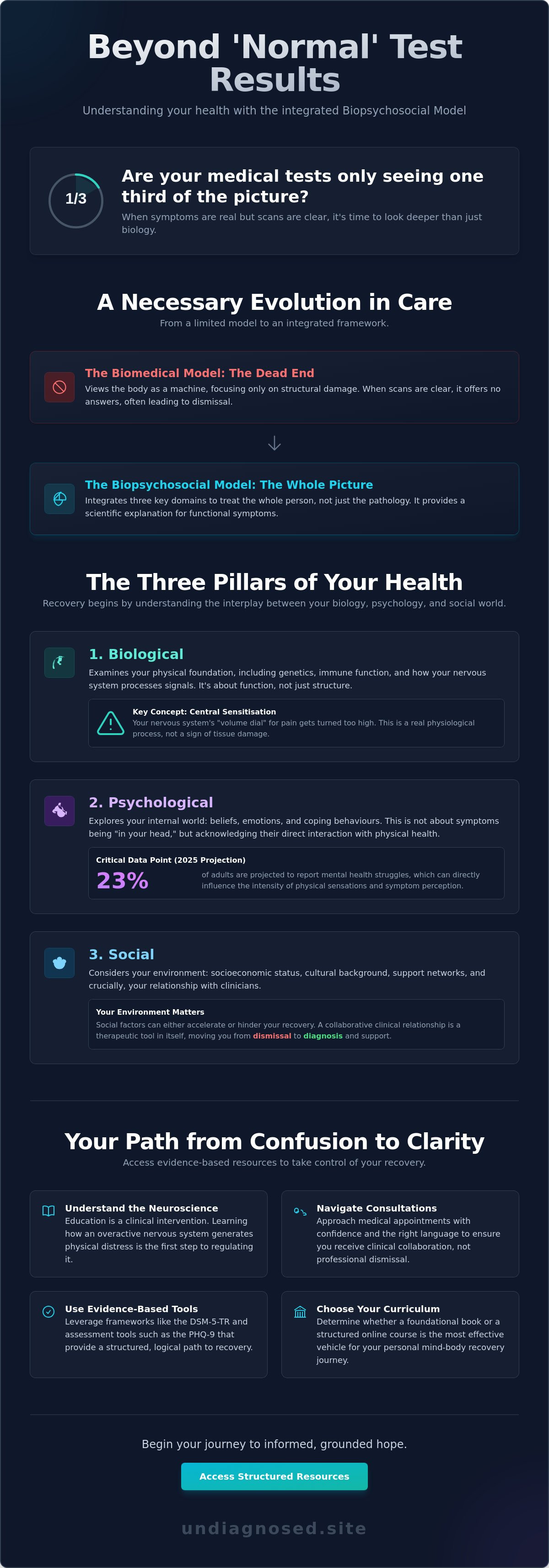
Understanding your health requires more than a simple checklist of physical symptoms. For decades, the medical establishment relied on a narrow biomedical model that viewed the body as a machine. If the parts appeared intact on a scan, the patient was often sent home without answers. biopsychosocial resources represent a necessary evolution in care. These tools move beyond the surface; they integrate biological data with psychological insights and social context to provide a complete picture of human well-being.
This approach isn't merely a preference; it's a clinical necessity. The biopsychosocial model acknowledges that health is determined by the complex interplay of three distinct yet inseparable domains. By utilising these resources, we move toward a standard of diagnosis, not dismissal. This shift is vital for those experiencing functional symptoms that don't show up on standard blood tests or MRIs. It's about finding the why behind the pain by looking at the Mind and Body Connection as a measurable, physiological process rather than a mystery.
The Three Pillars of the Biopsychosocial Model
The biological pillar examines your physical foundation. It includes genetics, immune function, and the specific ways your nervous system processes pain signals. When a person experiences central sensitisation, their biological alarm system becomes overactive, even if no tissue damage is present. This creates real, physical pain that exists independently of structural injury.
The psychological pillar focuses on your internal world. This isn't about "all in your head" rhetoric. Instead, it explores how beliefs, emotions, and coping behaviours influence the intensity of physical sensations. Data from 2025 shows that 23% of adults experience mental health conditions that directly interact with their physical health. Finally, the social pillar considers your environment. Your socioeconomic status, cultural background, and even the quality of your relationship with your clinician can accelerate or hinder your recovery journey.
Why Traditional Medicine Often Falls Short for MUS
Traditional medicine is designed to find structural damage. It excels at fixing broken bones or identifying tumours. However, it often fails when faced with Medically Unexplained Symptoms (MUS). When scans are clear, the biomedical model reaches a dead end. This leads to the pervasive frustration of being told nothing is wrong whilst your body is clearly in distress.
The biopsychosocial lens provides answers where traditional tests cannot. It recognises that symptoms can be functional rather than structural. Clinical standards updated in September 2024 continue to push for improved documentation of treatment limitations, reflecting a global shift toward ensuring mental and physical health are treated with equal rigor. Integrated care is the only path to long-term relief for those caught in the gap between clear scans and chronic physical distress. By accessing structured biopsychosocial resources, you can begin to navigate this gap with clinical authority and personal insight.
Biological Resources: Understanding the Neuroscience of Health
The biological component of recovery isn't about finding a "broken part" but about understanding how your brain processes signals. Many patients feel stuck because they lack the specific biopsychosocial resources needed to decode their own physiology. Central sensitisation is a volume dial for pain that has been turned too high. This isn't a sign of tissue damage; it's a maladaptive response in the central nervous system. By learning the neuroscience of health, you transition from being a victim of your symptoms to an active participant in your nervous system regulation.
Neuroscience Education for Patients
Education is a biological intervention. When you understand the clinical application of the biopsychosocial model, you begin to see that Functional Neurological Disorder (FND) is a problem of signalling, not structure. With a national shortage of over 6,200 practitioners as of 2026, the ability to self-educate using reliable biopsychosocial resources has never been more critical. Research aligned with the DSM-5-TR indicates that patient outcomes improve when they receive evidence-based explanations for their pain. This knowledge lowers the brain's threat level, which is the first step in calming an overactive nervous system.
Practical Biological Regulation Tools
Regulation requires practical application. The Vagus nerve acts as a bidirectional highway between the brain and the body's internal organs. By utilising specific breathing techniques, you can manually shift your body from a "fight or flight" state into a "rest and digest" state. This isn't magic; it's chemistry. Controlled exhalations alter the carbon dioxide levels in your blood, signalling safety to the brain. This physiological shift is essential for dampening the overactive signals that lead to chronic distress.
Sleep is another non-negotiable biological pillar. Chronic pain often disrupts circadian rhythms, creating a vicious cycle of fatigue and increased symptom sensitivity. Strategies that focus on light exposure and consistent timing help reset these rhythms, providing the restorative rest necessary for neural repair. In a market flooded with expensive gadgets, we advocate for "Hope, not hype." You don't need a miracle pill or a high-priced sensor; you need a structured understanding of your own biology. To explore these biological mechanisms in greater depth, you can learn more about the Mind and Body Connection through our foundational materials.
Psychological and Emotional Resources for Symptom Management
Validation is the anchor of psychological recovery. When you're told your clinical tests are clear, the implication is often that your pain isn't "real." We reject this. Your physical experience is valid, even when the primary drivers are psychological or emotional. Effective biopsychosocial resources bridge this gap by providing a framework for exploring, not ignoring, the emotional triggers that exacerbate physical distress. It's not about "fixing" a broken mind; it's about understanding how the brain uses pain as a protective mechanism during times of high stress or unresolved conflict.
Different psychological modalities offer unique paths to relief. Traditional Cognitive Behavioural Therapy (CBT) helps identify thought loops that keep the nervous system in a state of high alert. Acceptance and Commitment Therapy (ACT) builds the psychological flexibility needed to live a full life whilst sensations persist. However, for many with functional symptoms, Emotional Awareness and Expression Therapy (EAET) is a breakthrough. This modality focuses on identifying and expressing suppressed emotions that the brain has "translated" into physical pain, providing a direct route to symptom reduction that traditional talk therapy might miss.
Mind-Body Connection Exercises
Practical tools allow you to apply these theories in your daily life. Journaling isn't just about recording events; it's a specific technique used to uncover unacknowledged stressors that your conscious mind might be avoiding. Somatic tracking is another vital skill. Instead of reacting to pain with fear or frustration, you observe the sensation with neutral curiosity. This practice teaches the brain that the sensation isn't a threat, effectively lowering the neural "volume." Utilising mind-body balance tools can help desensitise the neural pathways that have become over-rehearsed in their pain response.
Reframing the Patient Narrative
Recovery requires a fundamental shift in how you view your body. Moving from "Why is this happening to me?" to "What is my body trying to tell me?" changes your relationship with your symptoms. This isn't just positive thinking; it's a biological strategy. Self-compassion lowers the threat response in the brain, whilst self-criticism keeps it elevated. Overcoming the stigma of "psychosomatic" labels is essential. In the context of the Mind and Body Connection, "psychosomatic" simply describes a physical process initiated by the mind. It is a biological reality, not a character flaw. By accessing the right biopsychosocial resources, you can transform your narrative from one of suffering to one of insight and agency.
Social Resources: Navigating the System and Support Networks
The social pillar is the most frequently overlooked component of the recovery process. Whilst biological and psychological tools are essential for internal regulation, your environment and relationships provide the external framework for healing. Social isolation isn't merely a feeling; it's a physiological stressor that keeps the nervous system in a state of high alert. With a global shortage of practitioners estimated at over 6,200 needed to meet demand by 2026, the ability to leverage community-based biopsychosocial resources is vital for those navigating chronic symptoms outside of traditional clinical settings.
Your recovery doesn't happen in a vacuum. Workplace stress, family dynamics, and even the way you speak to your clinician can either dampen or amplify your physical distress. By addressing the social context of your illness, you move from being a passive patient to an active advocate. This shift is necessary because many health systems still lack the vocabulary to discuss Medically Unexplained Symptoms (MUS) without falling into the trap of dismissal.
Advocating for Yourself in a Biomedical System
Navigating a system that prioritises "clear scans" over patient experience requires a strategic approach. To ensure your voice is heard, you must learn the specific skill of talking to doctors about MUS. This involves presenting your history in a way that highlights the mind-body link whilst maintaining clinical credibility. Organise your medical history into a timeline that includes both physical flares and significant life stressors. This provides a data-driven narrative that helps traditionally trained clinicians see the integrated picture rather than a series of disconnected symptoms.
Supportive communities are equally important, but they must be chosen with care. Many online forums inadvertently encourage "symptom-swapping," which can keep the brain hyper-focused on pain. Seek out groups that prioritise evidence-based optimism and recovery stories. These communities act as a social mirror, reflecting your potential for health rather than reinforcing your identity as a sufferer.
Environmental Adjustments for Recovery
Your physical surroundings and social interactions directly impact your biology. Social connection triggers the release of oxytocin, a hormone that naturally modulates pain and reduces the threat response in the brain. Conversely, social isolation and workplace conflict can trigger the same neural pathways as physical injury. Data from 2025 highlights a persistent gap in employment rates for those with chronic health conditions, illustrating how symptoms can lead to a cycle of social and economic withdrawal if left unmanaged.
Family members also require biopsychosocial resources to understand that your symptoms are a biological reality, not a choice. Educating your inner circle about the Mind and Body Connection reduces the burden of having to "prove" your illness. When your environment is organised to support your nervous system, you create the safety necessary for neural desensitisation. To master these advocacy skills and build a robust recovery environment, you can explore the Mind and Body Connection Online Course for structured, step-by-step guidance.
The Integrated Path: Choosing the Right Biopsychosocial Curriculum
Transitioning from understanding the theory of recovery to implementing it in your daily life requires a reliable vehicle. You've explored the biological, psychological, and social pillars that define your health. Now, you must select the biopsychosocial resources that best suit your personal learning style and recovery goals. With federal projections indicating a 49% increase in the demand for mental health services by 2033, the ability to access high-quality, self-led education is becoming an essential part of the modern patient's toolkit. It's about moving from a state of passive waiting to one of active, informed participation in your own well-being.
The choice between a foundational book and a structured online course depends on your need for depth versus direction. A book allows for quiet reflection and a deep dive into the science of the Mind and Body Connection. A course, however, provides the rhythmic consistency and accountability that many find necessary when retraining an overactive nervous system. Both options offer a path of hope, not hype; they provide a realistic, evidence-based methodology rather than a collection of empty promises or "quick-fix" solutions.
The "Undiagnosed - The Mind and Body Connection" Book: A Clinical Guide
Dr. Csaba Dioszeghy’s book, "Undiagnosed - The Mind and Body Connection", serves as a scientific mentor for those caught in the gap between "all-clear" medical tests and the reality of physical pain. It provides a rigorous map of the neuroscience behind functional symptoms, helping you understand how brain-body signalling can go awry without structural damage. This book is a vital resource for anyone who has felt dismissed by the traditional medical establishment. It was recently featured amongst the best mind-body books 2026, recognised by clinicians for its ability to translate complex biopsychosocial concepts into a patient-centred recovery plan.
Online Courses: The Mind and Body Connection
Whilst a book provides the "why," a structured online course delivers the "how." Digital curricula offer a level of engagement that static text cannot, providing video lessons and practical exercises that guide you through the process of neural desensitisation. Relying on "cherry-picked" advice from random social media videos often leads to confusion and inconsistent results. A professional course offers a logical, step-by-step progression that builds your confidence and your skills over time. If you're ready to commit to a guided recovery path, you can explore our Mind and Body Connection Online Course. This programme is designed to help you reclaim your life through education, insight, and the practical application of biopsychosocial resources.
Begin Your Path to Sustainable Recovery
Recovery is an active process of discovery, not just a passive search for a cure. By integrating biological insights with psychological and social strategies, you move beyond the frustration of "clear scans." You now understand that your symptoms are functional realities that require a structured, evidence-based response. Accessing the right biopsychosocial resources is the definitive step in shifting from a state of survival to a state of regulation. This journey replaces the stigma of "unexplained" pain with the clarity of neuroscience.
We provide hope, not hype. To move from theory to practice, you need a methodology you can trust. The Mind and Body Connection Course, developed by Consultant Physician Dr. Csaba Dioszeghy, offers the clinical authority and practical tools required to navigate your recovery with confidence. This curriculum provides a narrative of progress for those who have felt overlooked by the medical establishment. Start your recovery journey with the Undiagnosed Mind and Body Connection Course today. You don't have to navigate the complexities of your body alone; your path to relief is grounded in science and sustained by insight.
Frequently Asked Questions
Is the biopsychosocial model just for mental health?
No, the biopsychosocial model is a universal framework for understanding all human health and illness. Whilst it is often associated with psychology, it is equally vital for managing chronic physical conditions like autoimmune disorders or chronic back pain. It ensures that clinicians look at the whole person rather than just a specific organ or a "broken" part. It's about integration, not isolation.
Can biopsychosocial resources actually cure physical pain?
These tools are designed to facilitate recovery by addressing the neural pathways that sustain chronic distress. Whilst the term "cure" can be misleading, evidence-based biopsychosocial resources help desensitise an overactive nervous system, leading to measurable symptom reduction. By focusing on neural retraining rather than just masking pain, you address the root cause of functional symptoms. It's a path toward relief, not just a temporary fix.
How do I explain the mind-body connection to my GP?
Frame the conversation around clinical neuroscience rather than abstract concepts. Use specific terms like "central sensitisation" or "functional symptoms" to describe your experience. Explain that you want to explore an integrated approach that considers how your nervous system processes signals. This moves the consultation toward clinical collaboration, not professional dismissal. You're asking for a partnership that honours the Mind and Body Connection.
What is the difference between a biomedical and a biopsychosocial approach?
The biomedical model focuses strictly on physical pathology and structural damage found on scans or blood tests. If the test is clear, the model often fails the patient. In contrast, the biopsychosocial approach examines how biological, psychological, and social factors interact to create your physical experience. It's the difference between treating a specific diagnosis and treating the individual human being.
Are there free biopsychosocial resources available online?
Yes, many high-quality tools are available in the public domain for patient use. Standardised assessment tools like the PHQ-9 for depression or the GAD-7 for anxiety are free to access and help you track your emotional health. Many university medical centres also provide open-access biopsychosocial resources that explain the neuroscience of pain. These public tools provide an excellent starting point for self-education and symptom tracking.
How long does it take to see results using these tools?
Neural retraining is a gradual process of biological change, not an overnight solution. Most individuals begin to notice a shift in their symptom intensity or their emotional response to pain within 4 to 8 weeks of consistent application. Significant recovery typically involves several months of dedicated practice to fully rewire established pain pathways. It's a journey of steady progress, not a quick-fix promise.
Is the "Undiagnosed" course suitable for Functional Neurological Disorder (FND)?
Yes, the course is specifically tailored for those experiencing FND and other medically unexplained symptoms. It addresses the signalling errors in the brain that cause real physical dysfunction despite "normal" MRI or CT scans. The curriculum provides the structured neuroscience education and practical regulation tools necessary to manage the specific challenges of FND. It offers a clear map for recovery where traditional medicine often leaves patients lost.
What happens if my doctor does not believe in the biopsychosocial model?
You have the right to seek a second opinion from a clinician who utilises an integrated framework. The September 2024 MHPAEA final rules reinforce your right to access comprehensive care that doesn't treat mental and physical health as separate entities. If your current provider relies solely on an outdated biomedical lens, finding a specialist who understands functional disorders is a necessary step for your recovery. Don't accept dismissal as a final answer.