
A clear blood test does not mean your pain is imaginary; it often means the medical lens is simply too narrow. For the 28 million adults in the UK living with chronic pain, hearing that "it's just stress" feels like a dismissal of their physical reality. You've likely experienced the frustration of normal test results whilst your body feels like it's under siege. It's important to understand that the stress impact on health is a concrete biological event, not a psychological quirk. Your symptoms are a valid response to a nervous system that has remained in a state of high alert for too long.
Validation, not dismissal, is the foundation of our approach. This article explores the neuroscience behind the mind-body connection to show you exactly how the brain translates emotional strain into physical dysfunction. You'll move beyond "stress less" clichés to understand the specific neural pathways involved in your symptoms. By the end of this guide, you will have evidence-based tools and practical strategies to recalibrate your system and restore lasting balance to your life.
Key Takeaways
- Reframe stress as a biological survival mechanism rather than a psychological state, moving from mental confusion to physiological clarity.
- Explore how the stress impact on health affects the cardiovascular and digestive systems, bridging the gap between emotional turmoil and physical reality.
- Learn why clinical scans often highlight structure whilst overlooking the functional "software" of the nervous system, validating the experience of persistent symptoms.
- Identify evidence-based tools that target the parasympathetic nervous system to provide genuine biological relief rather than temporary mental distraction.
- Move beyond symptom management by building a resilient biological system through education and a structured path to mind-body recovery.
Understanding the Physiological Reality of the Stress Response
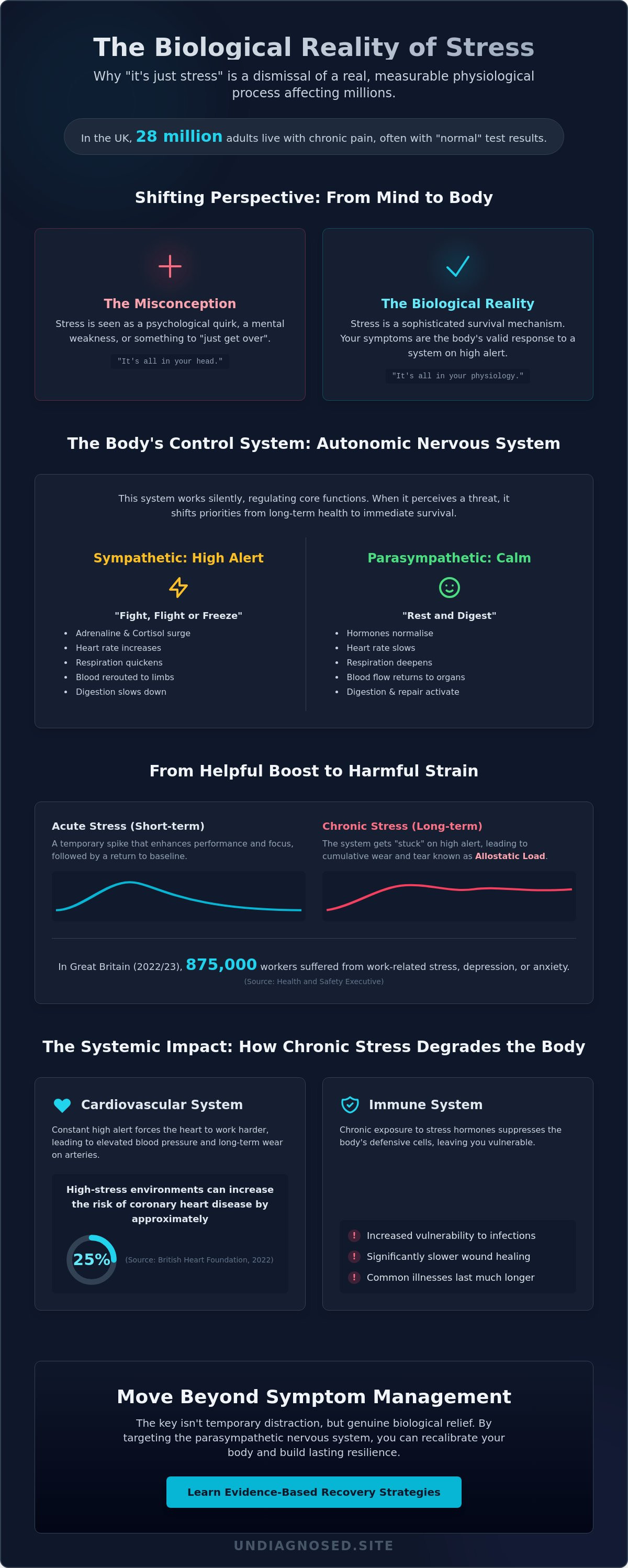
Stress is frequently dismissed as a mere state of mind or a lack of resilience. In reality, it's a sophisticated biological survival mechanism designed to protect us from immediate physical danger. At its core, the stress impact on health is a matter of physiology, not psychology. When your body perceives a threat, it prioritises survival over long-term maintenance. This shift is governed by the Autonomic Nervous System (ANS), which acts as the silent engine regulating everything from your digestion to your heart rhythm.
To understand this process, we must look at the concept of allostasis. Whilst homeostasis describes the body's effort to keep systems at a fixed set point, allostasis is the process of achieving stability through change. Your body's Physiological and biological responses to stress involve constant adjustments to internal levels, such as blood pressure and glucose, to meet external demands. Your symptoms are a biological reality, not a mental fabrication. They're the measurable evidence of your body attempting to find balance in an unbalanced environment.
The Fight, Flight, or Freeze Mechanism
When the sympathetic nervous system activates, the body's response is instantaneous and visceral. Within seconds, the adrenal glands release a surge of adrenaline and cortisol. This chemical cocktail increases your heart rate and respiration to pump oxygenated blood to your limbs. It's an efficient system for escaping a predator, but it's ill-suited for the modern world. Today, we're bombarded by "micro-stressors" that keep this system permanently switched on. Research indicates that the average person in the UK checks their smartphone every 12 minutes, with each notification potentially triggering a minor spike in these survival hormones. Because these triggers are constant, the body rarely gets the signal that the threat has passed.
From Acute Response to Chronic Strain
There's a critical distinction between helpful, short-term stress and the destructive nature of chronic activation. Acute stress is a temporary deviation from the norm that helps you perform under pressure. Chronic stress, however, leads to what clinicians call the allostatic load. This is the cumulative "wear and tear" on the body that occurs when the stress response is activated too frequently or for too long.
According to the Health and Safety Executive (HSE) 2022/23 report, 875,000 workers in Great Britain suffered from work-related stress, depression, or anxiety. In these high-pressure environments, the body fails to return to its baseline state. The system becomes "stuck" in a state of high alert, leading to persistent inflammation and a weakened immune system. This sustained pressure is where the most significant stress impact on health occurs, as the body's resources are drained by the constant need for adaptation.
The Systemic Impact: How Chronic Stress Affects Every Body System
Chronic stress is a physiological reality, not a state of mind. When the sympathetic nervous system remains locked in a "fight or flight" response, the stress impact on health manifests through measurable physical degradation. In the cardiovascular system, this persistent activation forces the heart to work harder for longer periods. Elevated cortisol levels lead to increased blood pressure and a significant reduction in heart rate variability (HRV). A 2022 study by the British Heart Foundation highlighted that high-stress environments can increase the risk of coronary heart disease by approximately 25%. This isn't just about temporary palpitations; it's about the long-term structural wear on your arteries.
Given these risks, taking proactive steps to order blood tests online with Health Screen Test can be a practical way to monitor cardiovascular health markers and detect potential issues early.
The immune system experiences a similar decline. Whilst short-term stress can actually boost immunity, chronic exposure to glucocorticoids suppresses the production of lymphocytes. This leaves the body vulnerable to opportunistic infections and significantly slows down wound healing. You might find that a simple scratch takes weeks to close, or a common cold lingers for a month. This is your body's way of signalling that its defensive resources are exhausted. Understanding the neuroscience of the mind-body connection helps us see that these aren't isolated incidents, but symptoms of a system under siege.
The Digestive System and the Gut-Brain Axis
The gut-brain axis is the bidirectional communication network between the enteric and central nervous systems. When you feel "butterflies" or nausea during a presentation, you're experiencing this connection in real-time. Chronic stress disrupts gut motility, either speeding it up or slowing it down, which often triggers functional disorders like Irritable Bowel Syndrome (IBS). Beyond movement, stress alters the delicate balance of the microbiome. This shift triggers systemic inflammation, which can compromise the intestinal barrier, often referred to as "leaky gut". It’s a cycle of physiology, not just psychology.
Musculoskeletal Tension and Chronic Pain
The brain often responds to perceived threats by initiating "muscle armouring," a reflexive guarding behaviour where muscles stay in a state of semi-contraction to protect the body from injury. Over time, this persistent tension leads to tension-type headaches and chronic lower back pain. This isn't just a physical knot in the shoulder; it's a neural pattern. Through the process of neuroplasticity, the brain can actually become more efficient at processing pain signals, a phenomenon known as central sensitisation. This means the body begins to amplify pain, making even minor sensations feel debilitating.
If you're struggling to separate these physical symptoms from your emotional wellbeing, you're not alone. Our goal is to provide evidence-based guidance that helps you regain control over your body's responses. By identifying these patterns, we move toward recovery, not just management.
The Puzzle of Medically Unexplained Symptoms (MUS) and Stress
Few experiences are as isolating as receiving a "normal" test result whilst your body feels like it's failing. You've sat in clinical waiting rooms, undergone blood tests, and waited weeks for MRI scans, only to be told there's nothing wrong. This gap between your lived experience and clinical data often leads to a sense of medical gaslighting. We provide diagnosis, not dismissal; your symptoms are real, even if they don't show up on a standard scan.
The stress impact on health isn't always visible through a lens or a microscope. While traditional medicine often focuses on structural damage, it frequently overlooks functional dysregulation. Adopting a biopsychosocial lens allows us to see the whole person. It acknowledges that biological signals, psychological states, and social environments all converge to create your physical reality. This isn't "all in your head"; it's a complex interaction within your nervous system that requires a sophisticated understanding of function over form.
Why Scans and Blood Tests Often Miss the Mark
Scans are excellent at detecting structural issues like a broken bone or a tumour. However, they're remarkably poor at measuring how a system functions in real-time. Think of your body as a high-end computer. An MRI can tell you if the hardware is smashed, but it cannot see a bug in the operating system. When the nervous system becomes dysregulated, the "software" is glitching despite the "hardware" looking perfect. This distinction is vital for understanding the mind and body connection and why functional health requires a different diagnostic approach. We look for patterns of dysregulation, not just physical breaks.
The Role of Central Sensitisation
When the stress impact on health becomes chronic, the brain can enter a state of central sensitisation. This is a physiological process where the central nervous system stays in a persistent state of high reactivity. It effectively turns up the volume on every signal from the body. A minor sensation that should be ignored is instead interpreted as intense pain or discomfort. The effects of stress on the body can prime this alarm system, especially if you've experienced prolonged periods of pressure or past trauma. This state of "high alert" means the brain is trying to protect you, but it's using outdated data. Recovery involves retraining the brain’s alarm system. It's a journey of regulation, not suppression.
- Structure: The physical bones, organs, and tissues.
- Function: How the nervous system communicates and processes signals.
- Sensitisation: An over-reactive response to internal or external stimuli.
Practical Strategies for Calming the Nervous System
Managing the stress impact on health isn't about escaping your life; it's about equipping your biology. When the body remains locked in a state of high alert, the sympathetic nervous system dominates, leading to the physical exhaustion many patients experience. We can shift this state by targeting the vagus nerve, the primary component of the parasympathetic nervous system. This isn't "relaxation" in a passive sense. It's active physiological regulation. By improving your vagal tone, you increase your body’s capacity to return to a state of equilibrium after a challenge. This process offers hope, not hype, through measurable biological changes.
Vagus Nerve Regulation and Breathing Techniques
Diaphragmatic breathing works because it physically stimulates the vagus nerve as it passes through the diaphragm. This sends an immediate signal to the brain that the environment is safe. For acute moments of pressure, the 4-7-8 technique is highly effective. Inhale for four seconds, hold for seven, and exhale forcefully for eight. This extended exhale is crucial because it triggers the "brake" on your heart rate. Slow, rhythmic breathing at approximately six breaths per minute has been shown to optimise heart rate variability and calm the sympathetic nervous system. Consistent practice helps build long-term resilience rather than providing a temporary fix.
Sleep Hygiene and Restorative Rest
Chronic stress often fractures the circadian rhythm, causing cortisol to spike when it should be at its lowest. To re-establish this rhythm, you need a structured transition from the day's demands to a state of rest. This is a matter of biology, not just habit. Active rest involves activities that engage the parasympathetic system, such as gentle stretching or reading. This differs from passive rest, like scrolling through a phone, which often increases cognitive load and exposes the eyes to blue light that suppresses melatonin. Consider this evening checklist to lower cortisol levels:
- Maintain a consistent sleep and wake time, even on weekends.
- Dim the lights 60 minutes before bed to signal the brain to produce melatonin.
- Keep the bedroom temperature at approximately 18°C for optimal recovery.
- Replace screen time with a non-stimulating activity like journaling.
Choosing the right strategy is a patient-centred process. What works for one person may not work for another. It's about discovery and practical application. If you're ready to move beyond temporary relief and understand the root of your symptoms, you can explore our evidence-based resources to start your journey toward recovery.
Beyond Symptom Management: Building Long-term Mind-Body Resilience
True recovery isn't about suppressing a single headache or masking a bout of fatigue; it's about shifting the state of your biological system. When we address the long-term stress impact on health, we move away from the "fix-it" mindset that characterises modern medicine. Instead, we focus on building a resilient nervous system that can process life’s pressures without defaulting to a state of chronic alarm. This transition requires a move from passive patienthood to active participation in your own physiological regulation.
The Power of Therapeutic Education
The first step toward lasting change is understanding that your symptoms are often a logical response to a perceived threat. Therapeutic education is a cornerstone of mind-body recovery. When you learn the neuroscience behind why your brain produces pain or fatigue, the brain’s "danger" signals begin to quieten. This isn't just theory; it's a biological shift. Understanding that your body is over-protecting you, rather than failing you, lowers the emotional charge of your symptoms.
Dr. Csaba Dioszeghy’s specialised approach bridges the gap between complex neuroscience and daily clinical practice. By providing a structured roadmap, patients can move away from the confusion of "undiagnosed" symptoms and toward a clear path of resolution. Structured programmes provide the safety and predictability the nervous system needs to begin the process of desensitisation. This education acts as a cognitive filter, helping you interpret bodily sensations through a lens of science rather than fear.
Creating a Sustainable Recovery Plan
Building resilience is a marathon, not a sprint. The stress impact on health is cumulative, so the solution must be consistent. We value consistency over intensity. It’s more effective to engage in ten minutes of nervous system regulation daily than to attend a three-hour workshop once a month. A sustainable plan integrates several key pillars:
- Regulated Movement: Gentle, mindful exercise that signals safety to the brain, rather than high-intensity workouts that might trigger a stress response.
- Nutritional Support: Eating to stabilise blood sugar and support the gut-brain axis, which is vital for neurotransmitter production.
- Daily Practice: Small, repeatable actions that reinforce a sense of internal safety and agency.
Recovery is possible when you stop fighting your body and start working with its natural protective mechanisms. We provide the tools to help you navigate this journey with clarity and confidence. You can find deeper insights in the "Undiagnosed" book or through our comprehensive digital resources. This is about hope, not hype; it is a process grounded in clinical evidence and dedicated practice.
Explore the Undiagnosed Mind and Body Connection course for a structured path to recovery and begin the journey toward a regulated, resilient life today.
Moving Beyond Symptoms Toward Mind-Body Recovery
Understanding the stress impact on health requires more than acknowledging a busy schedule; it demands a deep dive into how your nervous system governs your physical wellbeing. We've explored how chronic stress bypasses the mind to create tangible, systemic changes across every organ system. These physiological shifts often lead to the frustration of medically unexplained symptoms, where traditional tests return "normal" results whilst your body feels anything but.
True recovery isn't found in a quick fix. It's built through evidence-based insights and practical tools that recalibrate the nervous system. Dr. Csaba Dioszeghy, a Consultant Physician, developed the "Undiagnosed" resources to bridge the gap between clinical science and the patient experience. This biopsychosocial approach provides a structured path for those seeking diagnosis, not dismissal. You don't have to navigate this journey alone. Discover the "Undiagnosed" Book and Course for Mind-Body Recovery to begin your evidence-based journey toward relief. Validation is the first step toward healing, and your path to lasting resilience starts today.
Frequently Asked Questions
Can stress cause real physical pain even if my tests are normal?
Yes, stress creates genuine physical pain through neural pathways that clinicians call functional symptoms. When your scans appear normal, it indicates that your body's structure is intact, but the nervous system's signalling is dysregulated. Research from the University of Reading shows that emotional distress activates the same brain regions as physical injury. It's physiological reality, not an imaginary condition.
What are the most common physical symptoms caused by chronic stress?
Chronic stress frequently manifests as tension headaches, irritable bowel syndrome (IBS), and persistent fatigue. The stress impact on health often involves the musculoskeletal and digestive systems because of prolonged cortisol exposure. In a 2023 UK study, 74% of adults reported feeling so stressed they felt overwhelmed or unable to cope, leading to measurable physical changes like increased heart rate and shallow breathing patterns.
How long does it take for stress to start impacting my physical health?
Physical changes can occur within seconds during an acute "fight or flight" response, but chronic health issues typically emerge after 4 to 6 weeks of sustained pressure. During this period, the hypothalamic-pituitary-adrenal (HPA) axis remains overactive. This persistent activation leads to systemic inflammation. Long-term health consequences often become clinically visible once the body's natural recovery windows are consistently bypassed.
Is it possible to reverse the physical damage caused by long-term stress?
Yes, the body possesses a remarkable capacity for recovery through neuroplasticity and cellular repair. Evidence-based interventions like Cognitive Behavioural Therapy (CBT) or Mindfulness-Based Stress Reduction (MBSR) can lower systemic inflammation markers by 20% to 30% over 8 weeks. It's about restoration, not just management. By retraining the nervous system, you can dampen the overactive pain signals that have become habitual over time.
What is the difference between a psychological symptom and a functional physical symptom?
A psychological symptom involves your mood or thoughts, whereas a functional physical symptom is a tangible bodily sensation caused by nervous system dysregulation. It's a matter of biology, not just "all in your head." Functional symptoms occur when the brain's "software" sends incorrect signals to healthy "hardware." This distinction provides clarity, not confusion, helping you understand that your physical pain requires a physiological approach to treatment.
How can I tell if my headache is caused by stress or something else?
Stress-induced tension headaches typically present as a dull, constant ache on both sides of the head, often described as a tight band. They lack the visual disturbances or nausea associated with migraines. If your symptoms worsen during high-pressure periods at work or home, the stress impact on health is the likely driver. Tracking your symptoms for 14 days can help identify these specific environmental triggers.
What is the best way to explain medically unexplained symptoms to my GP?
Focus on your functional limitations rather than just the intensity of the pain. Tell your GP exactly how the symptoms prevent you from working or socialising. Use a 1 to 10 scale to describe your daily capacity. This approach ensures a consultation based on evidence, not guesswork. Providing a written log of your symptoms over a 28-day period offers the clinical data needed for an accurate assessment.
Can breathing exercises really change how my body processes pain?
Yes, controlled breathing directly stimulates the vagus nerve to activate the parasympathetic nervous system. This physiological shift lowers your heart rate and reduces the production of pro-inflammatory cytokines within minutes. By slowing your breath to 6 cycles per minute, you send a safety signal to the brain. This signal effectively "mutes" the intensity of pain messages being sent through the spinal cord.