
What if the "normal" results on your latest MRI aren't proof that your symptoms are imaginary, but evidence that your nervous system is simply misfiring? For the 16% of patients attending UK neurology clinics with functional symptoms, the search for a functional neurological disorder recovery course often begins with a desire for validation rather than just another test. You know that your tremors, weakness, or seizures are physically real, even whilst traditional scans suggest otherwise. It's a journey of seeking diagnosis, not dismissal.
We believe in hope, not hype. This article explores how a structured recovery programme can help you understand the mind-body connection and reclaim your quality of life through a biopsychosocial lens. You'll discover the specific tools needed to reduce symptom frequency and gain a clear explanation for why your body behaves the way it does. We'll preview the essential criteria for choosing a path that offers practical relief and long-term stability.
Key Takeaways
- Understand why education serves as a clinical foundation for healing, providing the structure needed to retrain a dysregulated nervous system.
- Explore the neuroscience of functional symptoms to learn how the brain sends "glitched" signals and how these neural pathways can be rewired.
- Identify the essential criteria for selecting a functional neurological disorder recovery course, ensuring you choose a programme built on evidence-based guidance.
- Discover practical regulation tools, such as vagus nerve stimulation, designed to help you manage physical symptoms and reclaim your daily independence.
- Learn how to move from medical dismissal to clinical clarity by embracing a philosophy of "Hope, not hype" in your journey toward recovery.
Why Education is the Foundation of any Functional Neurological Disorder Recovery Course
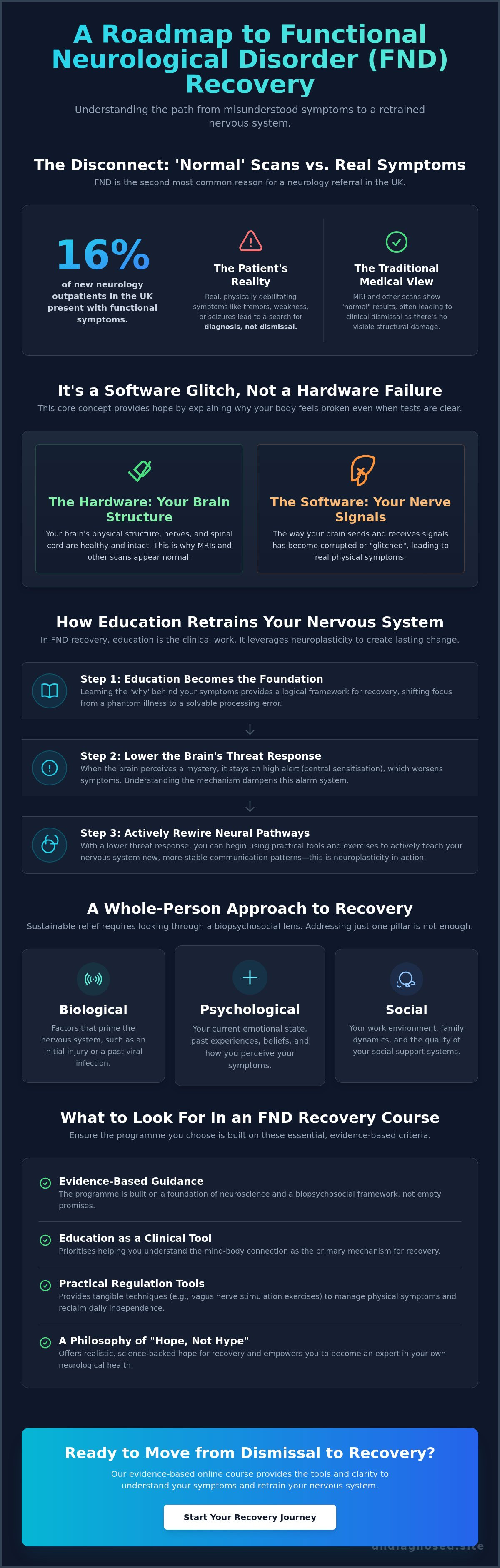
A functional neurological disorder recovery course isn't a passive learning experience; it's a structured clinical programme designed to retrain the nervous system. In traditional medicine, we often see education as a prelude to the actual work. In functional health, education is the work. This shift in perspective is vital for anyone who has been told their tests are normal whilst their body feels broken. We use the "software vs hardware" analogy to bridge this gap. Your brain’s structure (the hardware) is healthy, but the way it sends and receives signals (the software) has become corrupted. This distinction provides hope, not hype, by grounding your recovery in the reality of neurobiology rather than empty promises.
The Problem with the Traditional Medical Model
The standard patient journey in the UK is often defined by a series of clear scans followed by clinical dismissal. Research published in 2010 by Stone et al. indicates that functional symptoms account for approximately 16% of new neurology outpatients, making it the second most common reason for a referral. Despite this prevalence, many people feel left in a vacuum when their MRI doesn't show a lesion. A purely biological approach fails because it ignores the functional patterns of the nervous system. We prioritise diagnosis, not dismissal. Moving away from the "nothing is wrong" narrative is the first hurdle. When you understand that your symptoms are a result of a processing error rather than structural decay, you can stop searching for a phantom illness and start the process of healing.
Education as a Tool for Neural Plasticity
Learning the mechanism of Functional Neurological Symptom Disorder serves a specific physiological purpose. It lowers the brain's threat response. When the brain perceives a mystery, it stays in a state of high alert; this state worsens central sensitisation. Understanding the mind and body connection allows you to dampen this alarm system through logic and evidence. Recovery begins with the recognition that the brain is plastic. It can be retrained. By engaging with a functional neurological disorder recovery course, you're not just reading facts; you're actively teaching your nervous system to find a new, more stable baseline. This is the practical application of neural plasticity, turning complex science into daily relief. You are moving from a state of being "undiagnosed" or "misunderstood" to being an expert in your own neurological health.
The Science of Recovery: How Learning Rewires the Mind-Body Connection
Recovery from Functional Neurological Disorder (FND) begins with a shift in perspective. It's helpful to view the condition as a software issue rather than a hardware failure. The physical structures of your brain and nerves are intact, but the signals they send are disrupted. This "glitch" in communication often stems from a nervous system that has become overloaded by chronic stress or emotional weight. When the brain's processing centres are overwhelmed, they produce physical symptoms as a protective response. Central sensitisation is the brain’s heightened state of alarm where it perceives threat in normal bodily sensations.
Understanding these mechanisms is a core component of any effective functional neurological disorder recovery course. Scientific research, such as the Functional Neurologic Disorder Information provided by NINDS, confirms that these symptoms are real and debilitating, yet potentially reversible. By learning to identify the triggers that cause these signals to misfire, you can begin the process of recalibration. It's about clarity, not confusion; evidence, not guesswork.
The Biopsychosocial Approach to Chronic Symptoms
A sustainable recovery requires looking through a biopsychosocial lens. This framework acknowledges that your health is influenced by three distinct yet overlapping pillars. Biological factors might include an initial injury or a viral infection that primed the nervous system. Psychological factors involve your current emotional state, past experiences, and how you perceive your symptoms. Social factors encompass your work environment, family dynamics, and the support systems available to you.
Addressing just one pillar rarely leads to long-term relief. If you only treat the physical symptoms whilst ignoring a high-stress social environment, the brain remains in a state of high alert. A comprehensive functional neurological disorder recovery course integrates all three areas to build resilience. This holistic view is closely linked to the biopsychosocial approach to chronic pain, which emphasises that the mind and body operate as a single, unified system.
Neuroplasticity: The Brain’s Ability to Reorganise
The most encouraging aspect of FND science is neuroplasticity. This is the brain's inherent ability to form new neural connections and reorganise existing ones. Because FND is a functional problem, the pathways that send "glitched" signals aren't permanent. They're simply habits the brain has adopted under pressure. Through the repetitive practice of new cognitive and physical tools, you can "unlearn" these patterns and establish healthier ones.
Research like the PsiFUND study in the UK has demonstrated that specialist interventions can successfully reset disrupted neural signals. In clinical trials, targeted physiotherapy and cognitive strategies helped up to 72% of participants see a measurable change in their motor function. This isn't about a quick fix; it's about deliberate, evidence-based practice. Exploring these mechanisms often reveals why a structured recovery framework is more effective than isolated treatments. By consistently applying these tools, you provide your brain with the data it needs to return to a state of balance. We offer hope, not hype, grounded in the reality of your brain's capacity to change.
What to Look for in a Functional Neurological Disorder Recovery Course
Choosing a path to wellness requires discernment. You need evidence, not anecdotes. A high-quality functional neurological disorder recovery course must bridge the gap between complex neuroscience and your daily reality. It's about finding a structured environment that offers relief, not just more information. When you're managing fluctuating symptoms, the structure of your learning environment is as vital as the content itself.
Effective programmes prioritise four essential criteria to ensure they support your nervous system rather than overwhelming it:
- Clinical Leadership: The curriculum should be led by experienced clinicians, such as Dr. Csaba Dioszeghy, who understand the intersection of neurology and psychiatry.
- Actionable Tools: You need practical techniques for symptom management, not just theoretical lectures on brain function.
- Paced Accessibility: The ability to complete modules whilst managing fatigue or "brain fog" is non-negotiable.
- Holistic Scope: A comprehensive course must address the pillars of regulation: sleep, breathing, and emotional processing.
Evaluating Clinical Credibility
Clinical authority provides the foundation for safety. You should always verify if a programme is led by a Consultant Physician or a specialist who works directly with Functional Neurologic Disorder patients. This level of expertise ensures the advice is grounded in current neuroscience rather than speculative wellness trends. Credible courses offer hope, not hype. They avoid "quick-fix" promises that ignore the complexity of the nervous system. Instead, they provide a logical framework that translates clinical research into a language you can use at home. This approach respects your intelligence and your struggle, providing a path built on integrity.
Digital vs. In-Person Recovery Programmes
Traditional in-person therapy is valuable, but it often introduces stressors like travel and rigid scheduling. Digital recovery programmes offer a different kind of support. They allow you to engage with a functional neurological disorder recovery course from the comfort of your own home, reducing the sensory overload that often triggers symptoms. On-demand video lessons are particularly beneficial for those with fluctuating energy levels. If you're having a difficult morning, you don't miss a session; you simply wait until your symptoms settle. It's also vital to ensure the programme includes downloadable resources. Having physical worksheets or audio guides allows for offline practice, which is essential when screen time becomes difficult. This flexibility ensures that your recovery remains consistent, regardless of how you feel on any given day.
Core Modules of an Effective FND Recovery Programme
A structured functional neurological disorder recovery course provides a roadmap for those navigating the often-confusing world of brain-body communication. It transforms clinical theory into actionable steps. Effective programmes typically follow a four-pillar approach designed to move you from a state of constant alarm to one of controlled awareness. This is about evidence, not anecdotes; progress, not perfection.
Module 1: The Neuroscience of Symptoms. This module focuses on understanding the "why" behind the "what". It explains that FND is a problem with the brain’s "software" rather than its "hardware". When you understand that your symptoms are real but driven by misfiring signals, the fear response begins to diminish.
Module 2: Regulation Tools. This is where you learn the mechanics of recovery. It involves vagus nerve stimulation and specific breathing patterns. These tools are designed to manually shift the nervous system out of a persistent "fight or flight" state.
Module 3: Lifestyle Foundations. A calmer nervous system requires a stable environment. This module covers how to optimise sleep and nutrition to reduce systemic inflammation and support neurological health.
Module 4: Emotional Integration. This stage identifies the link between suppressed emotions and physical pain. It’s a vital step in ensuring that recovery is long-term and addresses the root causes of nervous system dysregulation.
Practical Tools for Daily Symptom Management
Consistency is the bridge to relief. For individuals experiencing chronic pain or dizziness, slow, diaphragmatic breathing helps lower heart rate variability and calm the autonomic nervous system. If you're managing functional seizures or tremors, sleep strategies are paramount. Research suggests that even a 15% improvement in sleep consistency can notably reduce the frequency of motor symptoms. Relaxation techniques shouldn't be seen as a luxury; they serve as a "reset button" that tells the brain the immediate environment is safe.
Bridging Theory and Practice
Knowledge alone doesn't change the nervous system; repetitive practice does. Daily "homework" or exercises are essential to reinforce the mind and body connection. By studying case studies, you can see how others have used these exact tools to return to work or hobbies. Self-regulation is the ability to influence your nervous system state. It’s the difference between being overwhelmed by a flare-up and having the confidence to manage it as it happens.
Undiagnosed: The Mind and Body Connection Online Course
Finding a reliable functional neurological disorder recovery course often feels like an exhausting cycle of trial and error. The Undiagnosed programme serves as the logical conclusion to this search, providing a structured pathway away from the confusion of unexplained symptoms. The curriculum is built on a foundational philosophy: Hope, not hype; Diagnosis, not dismissal. It isn't a "quick fix" scheme; it's a comprehensive digital curriculum designed to provide long-term stability through evidence-based guidance.
The course functions as a companion to the "Undiagnosed" book, creating a multi-layered learning experience. Whilst the book provides the narrative and theoretical framework, the online course translates these concepts into actionable steps. Enrolment involves a one-time fee, granting you lifetime access to the materials. This ensures you can return to the lessons whenever you need a refresher, without the pressure of recurring monthly subscriptions.
Designed by Dr. Csaba Dioszeghy
The programme was developed by Dr. Csaba Dioszeghy, a Consultant Physician who specialises in the biopsychosocial approach to medicine. He understands that physical symptoms are real and often debilitating, even when traditional scans return normal results. By integrating the latest neuroscience, the course explains how the brain and body communicate, effectively stripping away the stigma often attached to "psychosomatic" labels. Dr. Dioszeghy uses his expertise to bridge the gap between clinical theory and the lived experience of the patient.
The video lessons are delivered with a tone of calm reassurance. This specific communication style is intentional; it's designed to lower the physiological stress levels that frequently exacerbate FND symptoms. You'll find a focus on clarity and integrity, ensuring you feel heard and understood by a medical professional who respects your dignity. The lessons cover several critical areas, including:
- The mechanics of the nervous system and symptom generation.
- Practical strategies for managing sensory and motor disruptions.
- Techniques to re-establish the connection between the mind and the body.
- Methods for communicating your diagnosis to family and other healthcare providers.
Enrolling in Your Recovery Journey
Choosing this functional neurological disorder recovery course means gaining immediate access to a suite of video lessons and downloadable tools. There's no waiting list and no complex scheduling. Once you join, the entire library of resources is available to explore at your own pace. This flexibility is vital for those managing fluctuating energy levels or cognitive fatigue.
The course serves a dual purpose. It provides patients with the tools they need for relief, but it also acts as an educational resource for clinicians seeking to deepen their understanding of the patient journey. This shared language helps foster better relationships between patients and their medical teams. By moving methodically from the identification of the problem to the application of practical tools, the course builds a foundation of trust and progress.
Reclaiming Your Narrative Through Clinical Insight
Recovery begins when you replace confusion with clarity. You've explored how a structured functional neurological disorder recovery course provides the framework needed to navigate complex symptoms. By engaging with an evidence-based biopsychosocial curriculum, you transition from passive observation to active participation in your health. This journey focuses on hope, not hype; it's about applying practical tools that bridge the gap between neurological science and your lived experience.
Consultant Physician Dr. Csaba Dioszeghy developed the Mind and Body Connection Online Course to ensure every module meets rigorous clinical standards. You'll receive lifetime access to all digital resources and future updates, allowing you to revisit the science as your healing evolves. This isn't a temporary fix but a foundation for long-term stability. You deserve a recovery path that values your dignity and respects the physical reality of your symptoms.
Begin your recovery with the Mind and Body Connection Online Course
Your future isn't defined by your diagnosis, and with the right tools, you'll find the resilience to move forward with confidence.
Frequently Asked Questions
Is an FND recovery course the same as Cognitive Behavioural Therapy (CBT)?
No, a functional neurological disorder recovery course is not the same as standard CBT. While CBT focuses on cognitive patterns and thoughts, this course integrates neuroplasticity, physical regulation, and sensory strategies. Clinical research published in the Journal of Neurology, Neurosurgery & Psychiatry suggests that multidisciplinary approaches are more effective than psychological therapy alone for 60% of patients. It's about retraining the nervous system, not just changing how you think.
Can I take a recovery course if my symptoms are purely physical, like tremors?
Yes, you can take the course even if your symptoms are exclusively physical. FND is a disorder of the nervous system's function, meaning the brain's signals aren't being sent or received correctly. Whether you experience tremors, gait issues, or limb weakness, the focus remains on recalibrating those signals. The curriculum provides tools to address these physical disruptions through evidence-based physiological techniques rather than just emotional exploration.
How long does it typically take to see results from an FND recovery programme?
Recovery timelines vary, but many participants report initial shifts in symptom management within 12 weeks of consistent application. According to a 2020 study in The Lancet Psychiatry, intensive rehabilitation programmes often show significant improvements at the six-month mark. It's a process of gradual retraining, not a quick fix. You'll likely see small victories in your daily function before you notice a total reduction in symptoms.
Do I need a formal diagnosis of Functional Neurological Disorder to start the course?
You don't strictly need a formal diagnosis, but we strongly recommend a medical consultation first to rule out other conditions. This course is designed for those experiencing the "undiagnosed" state or those with a confirmed FND label. Having a clinician confirm your symptoms are functional ensures you're using the right tools for your specific situation. We prioritise clarity, not confusion, in your healing journey.
Is the Undiagnosed course suitable for healthcare professionals as well as patients?
Yes, the course is a valuable resource for healthcare professionals seeking to understand the patient perspective and modern recovery protocols. GPs, physiotherapists, and occupational therapists can gain insight into the mind-body connection that isn't always covered in traditional medical training. It bridges the gap between clinical theory and the lived experience of FND. This helps clinicians provide better support and more empathetic care to their own patients.
What happens if I find the course content too overwhelming due to brain fog?
If you find the content overwhelming, you can move through the modules at your own pace. We've designed the curriculum with brain fog in mind, using short videos and concise text blocks. There are no deadlines or pressure to complete sections by a specific date. You can revisit the tools whenever your energy levels allow; this ensures the learning process doesn't add to your physical or cognitive load.
Are there any physical exercises included in the FND recovery curriculum?
Yes, the functional neurological disorder recovery course includes specific physical grounding exercises and gentle movement patterns designed to stabilise the nervous system. These aren't high-intensity workouts but rather targeted movements to help your brain reconnect with your body. These exercises are based on established physiotherapy principles for functional symptoms. They focus on restoring normal movement patterns and reducing the internal noise that causes physical disruptions.
Can this course help with medically unexplained symptoms other than FND?
Yes, the principles taught in this course apply to various medically unexplained symptoms (MUS). Since many of these conditions involve a dysregulated nervous system, the tools for FND often provide relief for chronic fatigue or non-cardiac chest pain. Around 15% to 30% of primary care consultations in the UK involve symptoms that don't have a clear organic cause. This course offers a structured way to manage that uncertainty through practical, evidence-based guidance.