
What if the most effective tool to silence a "fight or flight" response wasn't a matter of willpower, but a specific physiological shift in how you breathe? You've likely felt the frustration of being told your symptoms are "all in your head" whilst your body feels like it's in a state of constant emergency. It's exhausting to receive normal test results when your heart is racing and your muscles are perpetually tense. We believe in validation, not dismissal. Your physical experience is real, and using breathing exercises for stress is a clinical way to recalibrate a dysregulated nervous system.
In this guide, you'll learn how to bridge the mind-body gap and manage the physiological symptoms that affect millions globally. We'll explore clinical tools to activate your parasympathetic "brake" and provide the practical resources you need to move from overwhelm to a state of grounded, scientific calm. This is about hope, not hype; it's about giving you the evidence-based guidance to reclaim control over your own biology.
Key Takeaways
- Understand how to use your breath as a manual override for the autonomic nervous system, moving from a state of high alert to physiological balance.
- Explore how deep diaphragmatic breathing stimulates the vagus nerve, the primary superhighway of the mind and body connection.
- Learn to select the right breathing exercises for stress by prioritising a 1:2 inhale-to-exhale ratio to effectively engage your parasympathetic "brake".
- Discover three evidence-based techniques, such as the "5-7" method, designed for immediate de-escalation of physical stress symptoms.
- Master the "Hope, not hype" approach by integrating micro-sessions into your daily routine; this helps prevent the accumulation of chronic tension.
Why Your Breath is the Remote Control for Your Nervous System
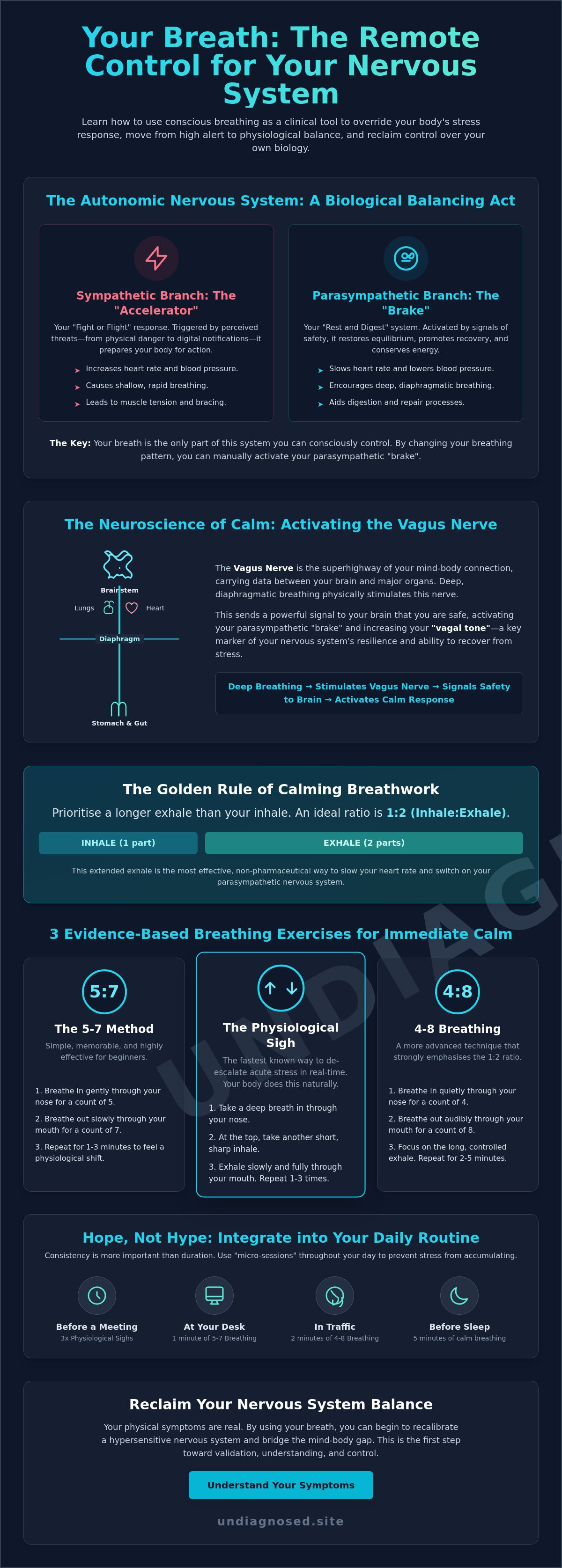
The autonomic nervous system (ANS) manages the involuntary processes that keep you alive: heart rate, blood pressure, and metabolic rate. It functions via two distinct pathways: the sympathetic branch, which accelerates the body's response to perceived threats, and the parasympathetic branch, which restores equilibrium. Whilst these systems usually run on autopilot, the breath provides a unique manual interface. By employing breathing exercises for stress, you're not merely waiting for a feeling to pass; you're actively engaging a biological override to downregulate your nervous system.
Stress often manifests as a feedback loop between the cognitive and the physical. A worried thought triggers a racing heart, and that racing heart signals back to the brain that the danger is real, intensifying the original anxiety. Breaking this cycle requires more than positive thinking. Conscious breathing serves as a clinical intervention that interrupts this loop at the physiological level. This approach prioritises connection over simple calming, focusing on how the mechanism of respiration can recalibrate the entire mind-body axis.
The Fight or Flight Response in 2026
Modern life in 2026 often keeps us in a state of evolutionary mismatch. Our survival systems are calibrated for physical predators, yet they are triggered by digital notifications and professional pressures whilst we remain sedentary. This persistent "high alert" state leads to chronic muscular bracing and digestive dysregulation. It's the primary driver behind the "undiagnosed" sensation of being constantly on edge, where the body remains in a defensive posture long after the stressor has vanished.
Breathing as a Biological Signal
Respiration serves as a direct communication channel to the amygdala. High-frequency, shallow breathing reinforces a state of alarm, whereas deliberate, rhythmic patterns signal to the brain that the environment is secure. This shift moves the organism from a survival-oriented state into one of recovery and repair. The mind-body connection is the physiological reality that your respiratory rhythm determines your internal chemical environment.
The Neuroscience of Calm: How Breathing Regulates the Vagus Nerve
The vagus nerve is the literal superhighway of the mind and body connection. As the tenth cranial nerve, it wanders from the brainstem through the chest and into the abdomen, touching nearly every major organ along the way. It carries a constant stream of data between your brain and your gut, heart, and lungs. When you engage in deep diaphragmatic breathing, you're physically stimulating this nerve as it passes through the diaphragm. This isn't a simple relaxation tip; it's a mechanical signal to the brain that the environment is safe and recovery can begin.
Clinicians use the term "vagal tone" to describe how efficiently your nervous system can switch from a state of high alert back to a state of balance. High vagal tone is a marker of resilience. It means your body can process a stressor and return to a baseline of calm without getting "stuck" in a survival response. Consistent use of breathing exercises for stress helps build this tone over time. This is a process of long-term neuroplastic change, not just a temporary escape from tension. If you're seeking a deeper understanding of your symptoms, recognising the biological, psychological, and social triggers of your dysregulation is the first step toward reclaiming control.
Recovery requires a biopsychosocial perspective, acknowledging that physical symptoms are rarely the result of a single factor. Biological predispositions, psychological patterns, and social environments all contribute to nervous system dysregulation. By addressing the biological component through breathwork, you create the physiological space needed to handle psychological and social stressors more effectively. This holistic approach ensures that you're treating the whole person, not just a isolated symptom.
Central Sensitisation and Physical Symptoms
A stressed brain often undergoes a process called central sensitisation. This occurs when the nervous system enters a persistent state of high reactivity, essentially "turning up the volume" on physical sensations. You might experience real pain, dizziness, or digestive distress despite receiving "normal" results from medical tests. These symptoms aren't imaginary; they're the result of a hypersensitive system. Rhythmic breathing helps lower this sensitivity threshold by providing the brain with consistent, evidence-based signals of safety. This approach offers validation, not dismissal, for those whose physical suffering has been overlooked by traditional diagnostics.
Measuring Success: Heart Rate Variability (HRV)
We can measure the health of your nervous system through Heart Rate Variability (HRV). A healthy, flexible heart doesn't beat like a metronome; it has tiny, rhythmic variations between each beat. High HRV indicates a nervous system that is responsive and resilient. The breathing exercises for stress recommended by the NHS are specifically designed to improve this variability. By focusing on a regular pace, you directly influence your HRV, training your body to move out of "survival mode" and into a state of physiological recovery.
Choosing the right technique requires a clinical understanding of your current nervous system state. An estimated 43% of adults reported feeling more anxious in 2024 than in the previous year, according to the American Psychiatric Association. This rise in collective distress makes the ability to select a specific intervention vital. We categorise breathing exercises for stress by their physiological objective: grounding for acute anxiety, energising for lethargy, or sedating for chronic pain. For most people seeking relief from physical symptoms, the 1:2 ratio is the gold standard. By ensuring your exhalation is twice as long as your inhalation, you maximise the stimulation of the vagus nerve and signal the heart to slow its pace.
Nasal breathing is essential for this process. It's superior to mouth breathing because it filters the air, regulates volume, and increases nitric oxide levels. This gas is a vasodilator, meaning it helps relax the inner muscles of your blood vessels, lowering blood pressure and improving gas exchange. When you tailor your breath to your state, you move from a passive experience of symptoms to an active role in your recovery. If you're experiencing the fatigue often associated with chronic "high alert" states, a focus on the inhalation can provide a gentle lift, whilst those in pain benefit most from the sedating effects of a prolonged exhale.
Diaphragmatic Breathing: The Foundation
Chronic "chest breathing" keeps the body in a state of high alert. This shallow pattern uses the neck and shoulder muscles, often contributing to the muscular tension that 36.2% of young adults report amongst other mental health symptoms as of March 2026. The diaphragm, your primary breathing muscle, sits at the base of the lungs. Engaging it fully allows for better oxygenation in the lower lung lobes where blood flow is greatest. You can identify if you're a shallow breather by placing one hand on your abdomen and one on your chest; if only the top hand moves, you're likely reinforcing a survival response through your respiratory pattern.
Box Breathing and Rhythmic Counting
Box breathing follows a 4-4-4-4 rhythm: inhale, hold, exhale, and hold, each for a count of four. This pattern is a clinical tool for improving cognitive focus whilst managing acute panic. The counting acts as a "cognitive anchor," giving the brain a rhythmic task that interrupts intrusive, stressful thoughts. This technique is a core part of The Mind and Body Connection: A Clinical Guide to Functional Health. By using these structured tools, you move from feeling overwhelmed to having a clear, evidence-based strategy for nervous system regulation.
Step-by-Step Guide: 3 Evidence-Based Breathing Exercises
Before beginning any breathing exercises for stress, you must establish a physical foundation. Find a neutral posture, either sitting upright with your feet flat on the floor or lying down on a firm surface. This alignment supports the spine and prevents the restriction of the diaphragm, ensuring your lungs can expand fully without muscular bracing. Establishing this baseline of physical support is a prerequisite for moving the body from a state of "high alert" into a state of recovery.
Exercise 1: The Calming 5-7 Breath
The 5-7 technique is a rapid tool for immediate physiological de-escalation. Inhale through your nose for a count of five, focusing on filling the belly rather than the upper chest. Pause for a brief second to acknowledge the fullness, then exhale slowly through pursed lips for a count of seven. This prolonged exhalation creates back-pressure in the lungs, which facilitates more efficient gas exchange and provides a potent signal to the vagus nerve. Evidence published in July 2025 suggests that sessions should last a minimum of five minutes to be clinically effective in lowering self-reported stress levels.
Exercise 2: Box Breathing for Mental Clarity
Originally utilised by elite performers like Navy SEALs to maintain calm under extreme pressure, box breathing is ideal for the 43% of adults who reported increased anxiety in 2024. The method follows a simple 4-4-4-4 pattern: inhale for four, hold for four, exhale for four, and hold for four. Visualising each side of a square as you move through these steps provides a cognitive anchor that stabilises the mind. It's particularly effective whilst at a desk or in stressful social situations, as it can be performed discreetly to interrupt the "fight or flight" response before it becomes overwhelming.
Exercise 3: The 4-7-8 Sleep Inducer
Specifically engineered for deep relaxation, the 4-7-8 rhythm acts as a natural sedative for the nervous system. Place the tip of your tongue against the tissue ridge behind your upper front teeth and keep it there throughout the exercise. Inhale through the nose for four, hold the breath for seven, and exhale through the mouth with a distinct "whoosh" sound for eight. This specific ratio helps reset the balance between carbon dioxide and oxygen, which is often disrupted by the shallow, rapid breathing associated with chronic stress. If you're ready to move beyond temporary relief and address the root of your physical symptoms, explore our clinical programmes for comprehensive nervous system regulation.
Beyond the Breath: Integrating Self-Regulation into Your Daily Life
Integrating breathing exercises for stress into a busy life requires a shift in perspective. We advocate for hope, not hype; whilst breathwork is a powerful physiological tool, it's not a magic wand that instantly dissolves chronic symptoms. It's a resource for regulation. By implementing "micro-sessions"—brief periods of intentional breathing lasting just 60 to 120 seconds—you can prevent the cumulative build-up of the "fight or flight" response throughout the day. This proactive approach is more effective than waiting for a crisis to occur. A 2023 meta-analysis of 12 randomised controlled trials confirmed that these interventions are associated with significantly lower stress levels, but their true power is unlocked through consistency.
Self-regulation doesn't exist in a vacuum. It works best when combined with other biopsychosocial tools, such as robust sleep hygiene and a balanced approach to physical activity. When you address the biological, psychological, and social factors of your health, you create an environment where your nervous system can finally feel safe. This is about moving from a state of constant emergency into a state of sustainable recovery. If your symptoms persist despite these tools, it's often a sign that the mind-body connection requires a more structured, educational approach to break the cycle of dysregulation.
Building a Sustainable Habit
Building a sustainable habit works best when you link it to existing behaviours. You might practice a 5-7 breath whilst the kettle boils or during the first few minutes of your lunch break. Tracking your physical symptoms alongside these sessions allows you to identify patterns in your nervous system's reactivity. It's vital to avoid the perfectionism trap; many patients feel they've "failed" if they can't dedicate 20 minutes to a practice. In reality, even 60 seconds of intentional breathing provides a necessary signal of safety to your brain, helping to lower the volume on persistent physical sensations.
Deepening Your Recovery Journey
For those living with functional neurological disorders or medically unexplained symptoms, education is the first step in clinical recovery. Understanding the mechanism behind why your brain is "turning up the volume" on pain or dizziness removes the fear that fuels the stress loop. You can move beyond simple symptom management toward a root-cause understanding of your health. This transition from a passive patient to an informed participant is where true long-term resilience begins. To explore these concepts further, consider The Mind and Body Connection: A Clinical Guide to Functional Health or read our guide on Choosing the Best Mind-Body Online Course for Functional Symptoms in 2026.
Reclaiming Your Nervous System Balance
You've moved from the confusion of "unexplained" symptoms to possessing the physiological tools for recovery. By understanding that your breath acts as a manual override for the autonomic nervous system, you can address the biological reality of your experience even when traditional tests return normal results. Whether you choose the 5-7 technique or Box Breathing, these breathing exercises for stress provide a clinical bridge between your mind and body. Consistency transforms these tools from a temporary fix into a foundation for long-term neuroplastic change.
Sustainable recovery involves a transition from managing symptoms to understanding their root cause through a biopsychosocial lens. Founded by Consultant Physician Dr. Csaba Dioszeghy, our approach provides evidence-based guidance for those navigating functional health challenges. You can explore the Undiagnosed book and online course for mind-body recovery to access practical tools designed for complex, physical symptoms. This is a path of hope, not hype; it's a commitment to your dignity and your health. You have the capacity to recalibrate your system and rediscover a life of calm and clarity.
Frequently Asked Questions
Can breathing exercises really help with physical pain?
Yes, breathing exercises reduce physical pain by lowering central sensitisation in the nervous system. By shifting the body out of a high-alert state, you effectively "turn down the volume" on pain signals sent to the brain. A 2023 meta-analysis confirmed that regular breathwork is associated with a significant reduction in the perceived intensity of chronic physical symptoms.
How long does it take for breathing exercises to work for stress?
You can feel a shift in your heart rate within 90 seconds, but clinical effectiveness requires a longer commitment. Research published in July 2025 indicates that a session should last at least five minutes to achieve a significant reduction in self-reported stress. Consistency is the key to moving from temporary relief to long-term nervous system regulation.
Why do I feel dizzy when I try to do deep breathing?
Dizziness usually occurs when you breathe too deeply or too quickly, which causes you to exhale too much carbon dioxide. This state, known as hypocapnia, temporarily alters the pH balance of your blood. To avoid this, focus on a gentle, natural inhalation and ensure your exhalation is slow and controlled rather than forceful.
What is the best breathing technique for a panic attack?
The "physiological sigh" is the most effective tool for stopping acute anxiety in its tracks. This technique involves a double inhalation through the nose followed by a long, sighing exhalation through the mouth. Researchers identified this in December 2024 as the fastest way to trigger the parasympathetic nervous system and end a fight-or-flight response.
Is it better to breathe through the nose or the mouth?
Nasal breathing is superior for nervous system health because it filters the air and increases nitric oxide production. This gas acts as a vasodilator, helping to lower blood pressure and improve oxygen delivery to your tissues. Whilst some breathing exercises for stress involve mouth exhalations, the inhalation should almost always be through the nose.
Can I do these exercises if I have a lung condition?
You must consult your clinician before starting a new respiratory practice if you have a diagnosed lung condition such as COPD or asthma. Whilst these tools are generally safe, individuals with respiratory disorders or severe trauma histories should begin with shorter, professionally guided sessions to ensure they don't inadvertently trigger breathlessness or distress.
How often should I practise breathing exercises for long-term results?
Daily practice is required to build vagal tone and create lasting neuroplastic change in the brain. Aim for at least one five-minute session every day to maintain a resilient nervous system. This regular commitment moves you away from "quick-fix" culture and toward a state of grounded, evidence-based health.
What is the difference between box breathing and belly breathing?
Box breathing is a rhythmic pattern focused on mental stability, whilst belly breathing is a mechanical technique focused on the diaphragm. Box breathing uses a structured 4-4-4-4 count to provide a cognitive anchor during stress. Belly breathing ensures you are using the full capacity of your lower lungs rather than shallow chest breathing.